
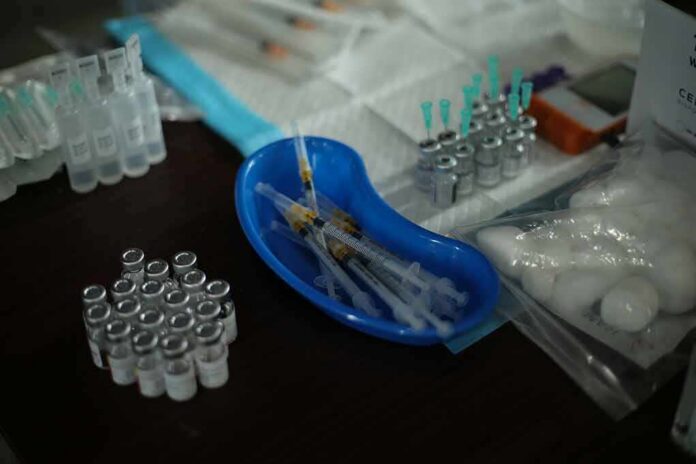
California is paying for harm-reduction kits that can include glass pipes, and that has turned a public-health policy into a fresh fight over waste, drugs, and government trust.
Quick Take
- California public-health guidance says safer smoking supplies, including pipes, are allowed through authorized syringe services programs.
- Los Angeles County outreach has handed out glass pipes with needles, fentanyl test strips, naloxone, and other supplies.
- Critics call the practice taxpayer-funded enabling, while state guidance frames it as harm reduction.
- The record provided does not show a state program formally labeled “meth pipes,” or a budget line for pipes alone.
What the California Guidance Says
California’s Department of Public Health says safer smoking supplies are an accepted harm-reduction tool and may be distributed through authorized syringe services programs. The same guidance says these materials can help reduce injection incidents by giving users a safer option than shared or improvised tools. California Opioid Response materials also say people may possess safer drug-use materials, including pipes, when they come from an authorized syringe services program.
That legal framework matters because it undercuts the simplest version of the criticism. The items can still look ugly and politically explosive, but state materials do not treat every pipe as banned paraphernalia when it comes from a lawful program. A California law summary also notes that paraphernalia rules still broadly prohibit pipes used for unlawful smoking, which is why the policy remains so controversial.
How Los Angeles County Uses the Supplies
Reporting from the Los Angeles Times described Los Angeles County outreach workers handing out glass pipes along with clean needles, fentanyl test strips, sanitary wipes, and naloxone. That report said the goal was to push people away from injection and toward smoking, which public-health advocates view as less risky. NewsNation similarly reported that county harm-reduction kits include pipes as part of a broader package of supplies.
The strongest factual point is not that the pipes are hidden or imaginary. It is that the county and state defend them as part of a wider strategy to prevent overdose and disease. Critics, including Chris Rufo in recent media appearances, use the distribution as proof of a broken system that spends public money on the wrong priorities. The sources provided do not include a budget audit showing exactly how much was spent on pipes alone.
Why the Fight Keeps Growing
This dispute lands in a larger fight over what government owes people living on the streets and using drugs. Supporters say harm reduction keeps people alive long enough to reach treatment. Critics say the state is normalizing addiction with taxpayer money and letting social problems spread under a public-health label. The supplied record supports the existence of the program and the policy rationale, but not a direct study proving the pipes increased drug use.
The record also leaves key questions unanswered. The sources describe Los Angeles County outreach and California law, but they do not show a statewide homeless-services program formally branded as a “meth pipe” giveaway. They also do not prove that every recipient was homeless. What the documents do show is a policy choice many voters will find hard to ignore: government is paying for drug-use supplies while officials insist the point is to reduce even worse harm.
Sources:
twitchy.com, latimes.com, cdph.ca.gov, newsnationnow.com, addiction-programs.net, fox11online.com, katu.com