
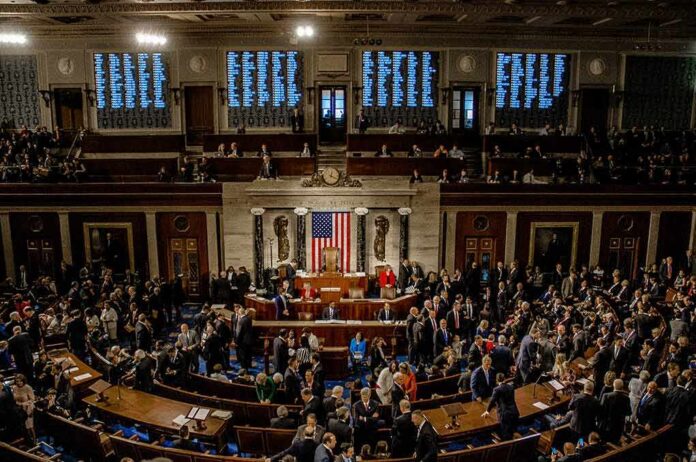
House leaders turned a simple anti-socialism vote into a party stress test that exposed how Washington uses symbols to dodge real work.
Story Snapshot
- The House passed a resolution condemning socialism and linking it to election security goals.
- Most Democrats voted no, while a small group crossed over to back the measure.
- Democratic leaders said Republicans paired the measure with election provisions to score points.
- The fight follows repeat anti-socialism votes in recent Congresses, showing a pattern.
What the House Actually Passed
House Republicans advanced House Resolution 1490 to condemn and denounce socialism in all its forms. The text also opposes the implementation of socialist policies in the United States. The resolution links its stance to “free, fair, and secure elections” and references support for the SAVE America Act. The measure sets a broad, values-based marker rather than new law. The official bill pages and text confirm these elements and the intent as stated by sponsors.
Representative Jeff Crank, the sponsor, framed the push as a stand against the Democratic Socialists of America and ideas he says would change how America governs. His press release argues the group’s platform threatens core institutions. Supporters say the vote draws a bright line on ideology and elections. The resolution’s design blends values talk with process talk, which often widens appeal among voters who worry about trust in elections and government integrity.
How Democrats Split and Why It Mattered
Floor reporting shows the House passed the resolution with Republican support and a handful of Democratic crossover votes. Most Democrats, including Leader Hakeem Jeffries, Whip Katherine Clark, and Caucus Chair Pete Aguilar, voted no. Their public stance signaled party resistance, but not full unity, given the members who broke ranks. The vote count and leadership positions were recorded by contemporaneous coverage of the roll call and caucus dynamics.
Democratic leaders said the issue was less about socialism than about election-year tactics. Caucus Chair Pete Aguilar argued Republicans attached the resolution to election provisions to create talking points. He said Democrats prepared an alternate resolution that removed the SAVE America Act language. That approach shows Democrats tried to avoid the label while stripping out what they saw as a partisan catch. This tactic was described in on-the-record comments and reporting.
Why This Keeps Coming Back
Congress has voted on anti-socialism language more than once in recent years. In 2023 and 2025, the House considered or passed measures denouncing socialism. Those earlier votes followed a similar pattern: sweeping language about America’s founding ideals and warnings about concentrated power. The repeat nature of these measures shows this is now a standard branding fight in Washington, not a detailed policy debate with direct legal effect.
House Dems overwhelmingly reject anti-socialism resolution after 2 moderates defy Jeffries
House Democratic Leader Hakeem Jeffries called the two moderates' defiance a 'breach of trust' https://t.co/AVdsSMfJyt
— The CSPAN Review (@CSpanreview) September 2, 2026
Both sides aim the message at frustrations many Americans share. Conservatives see the vote as a stand against big government, high costs, and elite control of systems that feel rigged. Liberals who dislike the label also resent political stunts that distract from wages, health care, and fairness. The shared bottom line is distrust. Many believe leaders focus on slogans and reelection over hard fixes to rising prices, border strain, energy costs, and the wealth gap. This vote fit that mood.
What It Means for Voters Tired of Showdowns
Symbol votes are cheap and loud. They rarely change the price of groceries, the speed of a doctor visit, or the safety of a job site. This resolution drew clear lines, but it did not fund a program, cut a tax, or fix a system. The pairing with election language raised the stakes but also the noise. If Congress wants to prove it serves the public, it will follow big talk with concrete bills that are narrow, measurable, and enforced.
What to Watch Next
Watch whether House and Senate leaders schedule time for bills that address pocketbook issues. Track if party leaders release clear plans on energy, border enforcement, and cost of living, with deadlines and oversight. Note if cross-party coalitions grow on election rules that both sides accept as fair. Also watch whether Democrats revisit their alternate language that denounces socialism while keeping the focus on bread-and-butter policy tradeoffs this year.
Sources:
congress.gov, govinfo.gov, foxnews.com, crank.house.gov, rules.house.gov, washingtontimes.com