
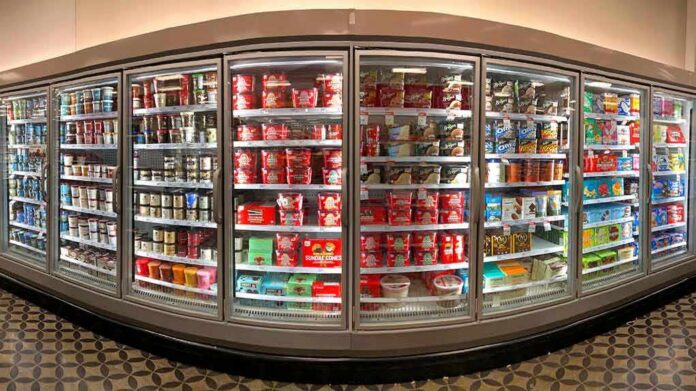
When attackers can reach a thermostat, they can touch the real world; the U.S. government’s joint warning about cyber threats to industrial refrigeration is about food, blood, chemicals, and transport safety—not abstract “IT risk.”
The Short Version
- Five federal agencies warned of ongoing malicious activity against industrial refrigeration and cold-chain monitoring systems worldwide, naming concrete weaknesses attackers are exploiting.
- Exposed or unpatched temperature and refrigeration controllers—often left on the public internet or using default passwords—are the immediate risk surface.
- Successful compromise can drive damaging temperature changes with physical consequences: inventory loss, equipment degradation, and even fire hazards.
- The affected footprint spans healthcare, food and agriculture, chemicals, and transportation—sectors whose operations depend on temperature integrity.
- Recent European incidents, and a cited FBI account involving French blood-service facilities, illustrate the adversary path from simple access to real-world disruption.
What the government actually warned—and why it matters
In a coordinated move, CISA, the FBI, HHS, USDA, and the Department of Transportation issued a joint advisory stating they are aware of malicious cyber activity targeting industrial refrigeration and cold-chain monitoring systems globally. This was not a generic “be careful” bulletin; the advisory specifies the problem: internet-exposed or unpatched electronic temperature and commercial refrigeration controllers, often still running with vendor default credentials, are being found and manipulated by adversaries. The agencies urge operators to remove unnecessary public exposure, change default passwords, apply security updates, and isolate these operational technology (OT) assets from business networks.
The stakes are concrete. If attackers can alter set points or defrost cycles, they can push systems beyond safe operating envelopes. The advisory flags risks that cascade from a few keystrokes into physical harm: fire hazards, accelerated wear and shortened service life of compressors and associated equipment, and the obvious but material losses of temperature-sensitive inventory—food, pharmaceuticals, blood products, and specialty chemicals.
How these systems are exposed: the mechanism of compromise
Modern cold-chain infrastructure is instrumented and remotely manageable by design. Facility teams and service vendors lean on web dashboards and networked controllers to monitor thousands of cases and walk-in freezers across distributed sites. That convenience becomes a liability when controllers are placed directly on the internet, shipped with known default passwords, or left on obsolete firmware that lacks basic authentication hardening. The joint advisory highlights exactly those conditions—publicly reachable interfaces, unchanged defaults, and missing patches—as the proximate causes that convert a scanning adversary into a damaging intruder. The FBI’s companion video underscores the point with a specific case: actors sought to disrupt refrigeration at three French national blood-service facilities via vulnerable controllers reachable from outside the network.
Technically, the adversary playbook here is not exotic. Internet-wide scanning tools identify controller brands and versions; manufacturer documentation or widely circulated installation guides reveal default credentials; weak segmentation allows pivoting from one device to many. From there, manipulating temperature set points or forcing prolonged defrost cycles can elevate internal case temperatures far above safe thresholds—enough to spoil inventory or stress compressors into failure. The physical process control is the crown jewel; the path to it often runs through the avoidable mistakes the advisory enumerates.
From warning to evidence: what recent incidents show
The joint warning did not emerge in a vacuum. Independent reporting describes recent European incidents in which attackers remotely changed commercial freezer and refrigerator temperatures, prompting stock loss and service disruptions; French officials also acknowledged targeting at blood-service facilities, where backstops reportedly prevented the loss of blood products. U.S. outlets recapped the federal advisory’s physical-impact concerns—inventory spoilage, equipment damage, potential fire hazards—and situated them in that cross-border pattern of activity. The FBI’s account aligns with those reports, citing access through unpatched, internet-exposed, or default-password-protected controllers at French blood-service sites.
Two things are notable about this evidentiary picture. First, the risks are not theoretical; investigators have observed adversaries reaching, and in some cases altering, the control layer. Second, public materials stop short of naming a perpetrator or presenting a single, coordinated campaign with shared infrastructure. The advisory’s remit is defensive hardening across sectors—healthcare and public health, food and agriculture, chemicals, and transportation systems—where the same class of device and configuration error recurs regardless of who is probing it.
OT, not IT: why cold-chain attacks are different
Refrigeration control compromises sit within a broader shift from enterprise IT ransomware toward direct interference with operational technology. Most industrial incidents still begin in IT networks and trigger operational shutdowns as a precaution; confirmed adversary manipulation of process controls remains the narrower, but growing, subset that security teams must plan for. That is precisely why a simple exposure—an internet-facing controller with a default password—can be so consequential: it skips the usual ransomware detours and lands in the control loop where a set-point change is a physical action, not merely a line in a log.
Cold-chain systems are also safety systems. They protect blood plasma viability, vaccine potency, and food safety; they preserve chemical stability and reduce combustion risk for certain materials. An hour outside tolerances can force days of recovery or irreversible loss. That asymmetry—trivial remote cause, outsized physical effect—is what elevates cold-chain cybersecurity from “compliance hygiene” to core operational risk management.
🚨 U.S. Agencies Warn of Cyberattacks Targeting Industrial Refrigeration Systems
CISA, FBI, HHS, USDA, and DOT have issued a joint warning about threat actors targeting industrial refrigeration and cold-chain monitoring systems globally, potentially causing fires, equipment… pic.twitter.com/PEjpA6SRcn
— ByteCheck (@ByteCheck101) November 9, 2026
What operators should do now: practical, durable controls
The federal guidance is deliberately pragmatic and maps cleanly to the observed failure modes. Start with exposure reduction: remove controllers from direct internet access; where remote access is essential, front it with a well-managed VPN, enforce multifactor authentication, and restrict source IPs. Eradicate default credentials and weak shared passwords; implement unique, role-appropriate accounts. Patch hardware and firmware to supported versions; where vendors no longer supply security updates, plan replacements rather than running indefinitely on obsolete platforms. Segment OT networks from enterprise IT, and from each other; treat refrigeration plants, case controllers, and monitoring gateways as separate security zones with least-privilege routing and explicit allow-lists.
Then layer operational safeguards that assume imperfect technical control. Configure automated alarms for out-of-range temperatures and unexpected mode changes; require dual-acknowledgment for high-impact set-point edits; log and routinely review configuration changes; test fail-safes that return systems to known-good states after power cycles or communication loss. Finally, rehearse incident response with facilities, quality, and vendor teams: know how to isolate compromised controllers, validate product integrity, and execute disposal or recall workflows swiftly if thresholds are breached. These are not theoretical exercises; they are the difference between a nuisance intrusion and a public-health event.
Why attribution is secondary—and resilience is primary
The public warning names no adversary, and that is fine for the purpose at hand. Internet-exposed controllers with default passwords are target-agnostic problems; criminals, hacktivists, and state-linked operators all use the same search engines, the same documentation, and the same weaknesses. The decisive action is therefore not speculation about who, but disciplined reduction of attack surface and robust operational backstops. The advisory’s cross-sector scope reflects how widely cold-chain dependencies reach; the mitigation list is short because the root causes are well understood and fixable if owners and vendors decide to fix them.
Sources:
thehill.com, cisa.gov, bleepingcomputer.com, cbsnews.com, scworld.com