Saudi Arabia says Iran-backed militias launched drones from Iraq at the kingdom’s largest oil refinery, and Riyadh has already struck back inside Iraq.
Story Snapshot
- Saudi Arabia’s Ministry of Defense says the Islamic Resistance in Iraq launched drones at the Abqaiq oil refinery, with several intercepted.
- Saudi and U.S. forces reportedly hit Iran-backed militia sites in Iraq in response to the strike.
- The Abqaiq facility is the world’s largest crude oil stabilization plant, capable of processing about seven million barrels a day.
- An Iraqi militia group has denied responsibility, and independent forensic proof of the launch site has not been made public.
- The incident echoes the 2019 Abqaiq attack, which briefly knocked out half the kingdom’s oil output and rattled world markets.
Saudi Arabia Names Iraq-Based Militias in Abqaiq Strike
Saudi Arabia’s Ministry of Defense confirmed that drones tied to the Islamic Resistance in Iraq targeted the Abqaiq oil refinery. Officials said air defenses intercepted several of the drones before they could do more damage. Defense ministry spokesperson Turki al-Maliki said publicly that the drones were launched from Iraqi territory by Iran-backed militias, placing direct blame on Tehran’s proxy network rather than treating this as an isolated incident.
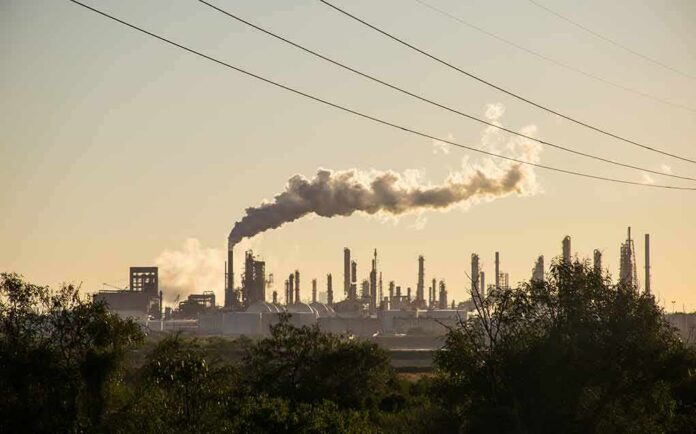
Abqaiq is not just another refinery. It is Saudi Aramco’s crown jewel, the largest crude stabilization plant on Earth, with the capacity to process roughly seven million barrels of oil a day. Any disruption there sends shockwaves through global energy markets, which is exactly why Iran’s proxy militias keep aiming at it instead of smaller, less strategic targets.
Kingdom Retaliates With US-Backed Strikes in Iraq
Saudi Arabia did not just absorb the hit. Reports say Saudi and American forces carried out strikes against Iran-backed militia positions inside Iraq in direct response to the Abqaiq attack. This marks a sharp escalation from the usual pattern of statements and denials, showing Riyadh is willing to hit back militarily rather than simply issue condemnations after each new provocation from Tehran’s regional network.
Saudi Arabia’s Ministry of Foreign Affairs also publicly criticized Iraq’s government for allowing Iran-backed militias to operate and launch attacks from its territory. This is not the first time Riyadh has aimed its frustration at Baghdad rather than only at Tehran, arguing that Iraq bears responsibility for what happens within its own borders regardless of who pulls the trigger.
Denial From Iraqi Militia Group Adds Uncertainty
An Iraq-based militia group has denied it carried out the strike and pointed instead to Yemen’s Houthi rebels, who have claimed responsibility for past attacks on Saudi oil facilities. That denial has not been backed by debris analysis, radar tracks, or any independent forensic evidence placing the drones’ true origin, leaving Saudi Arabia’s stated attribution as the only detailed, on-record account so far.
Echoes of 2019 Attack Raise Stakes for Oil Markets
This is not the first time Abqaiq has burned. A 2019 drone and missile attack on the same facility briefly cut Saudi oil output in half and sent crude prices spiking. Houthi rebels claimed that attack, Saudi Arabia and the United States blamed Iran, and a United Nations report later said it could not independently confirm Iran’s involvement at the time.
⚡️⭕️ Digest — 13:06–16:07 UTC
Abdulmalik Al-Houthi delivers major address: says US-Israel plan targets "changing the Middle East" to establish "Greater Israel," accuses Saudi Arabia of acting as Zionist partner, vows "blockade for blockade" in response to Saudi pressure on…
— Middle East Observer (@ME_Observer_) July 30, 2026
Iran-backed militias in Iraq have kept up a steady drumbeat of drone strikes on oil and military sites well beyond this single incident, part of a broader pattern of attacks throughout the region in recent years. No single group has always claimed responsibility, which lets Tehran’s network deny direct involvement while still pressuring Gulf oil producers and Western allies.
Why This Matters for American Energy and Foreign Policy
Every time Iran’s proxies target Saudi oil infrastructure, global energy prices feel it, and American drivers eventually pay the price at the pump. President Trump’s administration has pushed to restore U.S. energy dominance and reduce dependence on unstable foreign supply chains. Attacks like this one on Abqaiq are a stark reminder why Middle East stability and a strong deterrent against Iran’s proxy militias still matter for everyday American families.
Sources:
csis.org, timesofisrael.com, reuters.com, facebook.com, wsj.com, bbc.com