Iran is calling President Trump’s naval blockade an “act of war,” and tankers are already burning in the Strait of Hormuz.
Quick Take
- Iran’s Revolutionary Guard says U.S. and allied warships are blocking its ports and protecting unauthorized tanker traffic.
- A senior Iranian official called the blockade an act of war Tehran will remember forever.
- Secretary of State Marco Rubio says the pressure campaign is working so well that major combat strikes aren’t needed right now.
- Critics warn the blockade has no clear endgame and could drag America into a wider war.
Tankers Burn As The Blockade Tightens
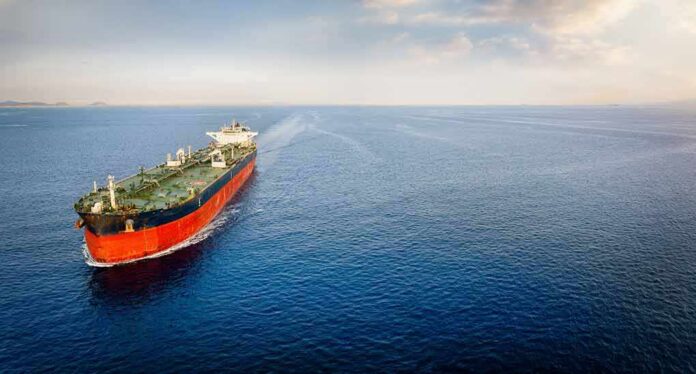
Oil tankers are catching fire in the Strait of Hormuz right now. CBS News reported on November 11 that Iran kept attacking vessels in and near the strait, while the U.S. military struck tankers it accused of breaking the blockade. Iran’s Revolutionary Guard said two oil tankers hit mines and claimed the U.S. military was “protecting” ships using unauthorized routes. This is not a quiet financial squeeze. It is a shooting match playing out on the water.
President Trump launched the maximum pressure campaign in February 2025 to cut off Iran’s path to a nuclear weapon and choke its oil exports to zero. That goal is sound. Iran’s regime has funded terror groups and threatened American troops for decades. But a policy built to starve a hostile regime of cash has turned into direct naval combat, and that changes the risk calculation for every American family watching gas prices and troop deployments.
Tehran Calls It An Act Of War
Iranian official Mohammad Mokhber did not mince words. He said any nation helping enforce the U.S. blockade of Iranian ports committed “an act of war” that would stay in Iran’s “historical memory”. That is Iran’s framing, not an independent legal ruling. But it matters because it shows Tehran sees this as a fight, not just sanctions paperwork. The American Conservative reported that after U.S. strikes, Iran fired missiles and drones at bases in Jordan and the United Arab Emirates, on top of the tanker attacks.
This back-and-forth is exactly what worries conservatives who remember the costly, open-ended wars of the past two decades. Nobody disputes that Iran is a bad actor. The question is whether a blockade without a clear stopping point draws American sailors and soldiers deeper into a fight Congress never declared.
Rubio Says Pressure Is Working
The administration argues this approach is paying off without more bloodshed. Secretary Rubio said the economic damage from sanctions and the blockade is hitting Iran so hard that President Trump “really doesn’t have any need to conduct major combat operations”. A White House official told Fortune that sanctions and the naval blockade have left Iran “completely broke,” giving Trump multiple pressure points short of all-out war. Middle East Institute analyst Alex Vatanka went further, suggesting the squeeze could weaken Iran’s system “from within” toward collapse.
That is a real and defensible argument. Economic leverage has forced Iran to the table before, and nobody wants American troops fighting a third Middle East ground war. Reports of Qatar brokering talks involving inspections and unfreezing assets suggest the pressure may be producing negotiation, not just escalation.
No Clear Endgame Raises Hard Questions
Here is the problem conservatives should not ignore. The American Conservative noted the administration itself has not spelled out whether the goal is economic collapse, forcing Iran to cave, or simply reaching a deal. Without a defined objective, a strategy built on squeezing a cornered regime can spiral. History backs up that caution. Research spanning three centuries of economic warfare found sanctions without a credible military off-ramp often fail to produce surrender and instead provoke violent escalation when the target feels its survival is at stake.
Nobody should be fooled into thinking this is purely a financial squeeze anymore. Tankers are exploding, missiles are flying at American allies’ bases, and Tehran is openly calling it war. President Trump deserves credit for refusing to let Iran build a nuclear weapon or fund terrorism unchecked. But Congress has a constitutional duty to demand a clear strategy, a defined endgame, and honest answers before this blockade turns into the next long war nobody voted for.