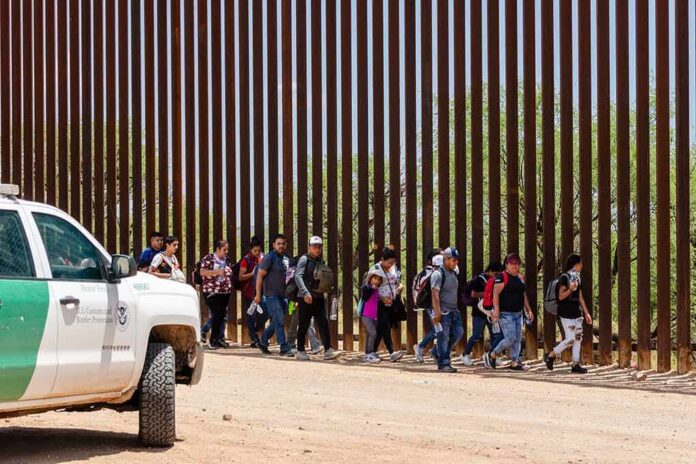
Hundreds of migrants left Tapachula, Mexico, marching north to demand papers and access to jobs, testing border controls again.
Story Snapshot
- About 500 migrants departed Tapachula, near Guatemala, to protest long waits for documents and seek work authorization.
- Mexico’s southern bottleneck has trapped many for months, fueling repeat group marches known as caravans.
- Some reports say many participants aim to relocate within Mexico, not push to the United States border immediately.
- United States officials say the border remains tightly controlled and are tracking caravan movements.
What Happened In Southern Mexico
Associated Press reported that roughly 500 migrants moved out of Tapachula on Wednesday. They marched to protest long delays in paperwork and asked for permission to relocate to Mexican regions with more jobs. Tapachula sits just north of the Guatemala line. It has become a holding area where cases pile up and work is scarce. This latest group followed a familiar route along highways, carrying signs and speaking to media about stalled cases and empty wallets.
Newsday described the same group size and motive, noting the effort to find legal status or work in Mexican cities beyond the border zone. Prior caravans started the same way, with a steady drumbeat of slow processing and few options. Some participants told reporters they had waited months with no answer. Others said they would accept work in Mexico if they could move legally. The push north is not only about reaching the United States; it is often about escaping administrative limbo.
Why Tapachula Keeps Boiling Over
Mexican and international analyses have called Tapachula a “forced waiting” city. Research shows that detentions in the south and long processing times keep people stuck, which leads some to band together in caravans to overcome checkpoints. Backlogs stretch past the legal timelines many expect. Shelters and services strain under the load. With few formal jobs allowed while claims are pending, many people struggle to afford rent and food. That pressure cooker keeps producing new marches.
Doctors Without Borders and other observers have documented the same pattern for years. People apply for papers, then face months of delays with limited freedom to move within Mexico. That reduces access to stable work and basic services. Families then face a hard choice: wait longer with no income or walk north in a group where officials may be more likely to process or redirect them. Caravans are a signal of that pressure, not a spontaneous event. They are the visible tip of a large backlog problem.
How This Affects United States Border Security
Fox News cited a Department of Homeland Security message stressing that the United States border remains closed and secured, and that United States Border Patrol continues to track caravan activity under President Trump’s leadership. That warning aims to deter illegal crossings and signal quick enforcement. It also reflects closer cooperation with Mexico to halt large groups far from the United States line. Prior small caravans were broken up by Mexican authorities before reaching the north.
For American communities, controlled borders protect public safety, jobs, and the rule of law. When caravans form, cartels often try to blend in, and human smuggling risks rise. That is why fast, firm action matters. Clear messaging, quick case handling in Mexico, and strong barriers at our line reduce pull factors. If Mexico expands work authorization away from the border and speeds case reviews, fewer people will feel forced to march. That would cut pressure on our agents and towns as well.
What To Watch Next
Reporters on the ground say many in this caravan want legal status inside Mexico first, not a dash to the United States. If Mexican authorities offer transfers to interior states or temporary work permits, the march may slow or disperse. If delays continue, more groups could form. United States officials will watch rail hubs and highways for splinter groups that still aim for the border. Any shift in Mexican policy or resources could change the pace within days.
NEW: NEW: DHS confirms to @FoxNews that Border Patrol is actively tracking a migrant caravan that originated in Honduras and is now moving through southern Mexico with hopes of reaching the US/Mexico border. DHS is warning the migrants that catch and release is over, and anyone… pic.twitter.com/xxYxfKiZNT
— Vince Sheetz (@VinceSheetz) September 29, 2026
For readers, the bottom line is simple. Tapachula’s bottleneck keeps creating caravans. Mexico faces backlogs and limited jobs near the border. The United States is enforcing the line and tracking movements. Strong cooperation, fast processing, and strict border controls work together to protect our communities and our sovereignty. That is the path to order and safety while respecting law and due process on both sides of the border.
Sources:
aljazeera.com, apnews.com, sfgate.com, krgv.com