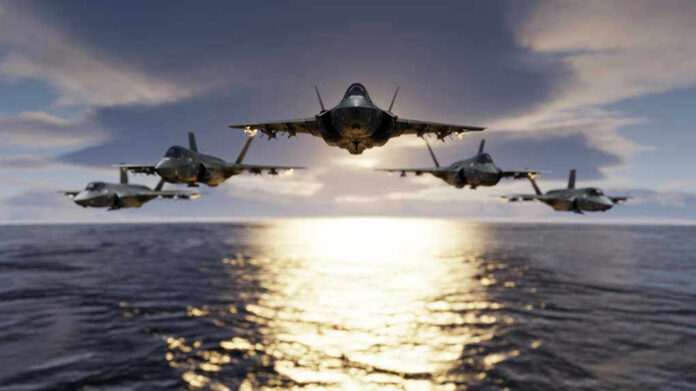
In the confusion of the first modern mass-casualty air defense crisis on U.S. soil, a pair of D.C. Air National Guard F-16 pilots launched without missiles and resolved, if required, to stop United Airlines Flight 93 by ramming it—a last-resort act born of training, chain-of-command intent, and the unforgiving timing of that morning.
The Short Version
- Two D.C. Air National Guard F-16 pilots scrambled unarmed on 9/11 and planned a deliberate midair ramming to prevent Flight 93 from reaching Washington, D.C.
- Their resolve aligned with national command intent: senior leaders conveyed shootdown authority during the attacks, though communications lagged the operational window.
- The “ram mission” was a tactical improvisation under weapons-short conditions; it reflects air-defense doctrine’s emphasis on negating a threat when intercept and escort are no longer viable.
- The passengers of Flight 93 forced the crash in Pennsylvania before any intercept occurred; the pilots’ plan never had to be executed.
What the pilots actually prepared to do—and why it mattered
Lt. Heather “Lucky” Penney and her flight lead, Lt. Col. Marc Sasseville, launched from Andrews without live ordnance. Their calculation was stark: if they found United 93 still inbound, Sasseville would take the cockpit, Penney the tail, to destroy flight controls and destabilize the airframe—trading their jets to break the airliner’s ability to fly. Penney has described the plan consistently for years, and the National Museum of the U.S. Air Force now characterizes her sortie plainly as a ramming mission intended to keep Flight 93 from Washington, D.C.. Her own account details the tail-cockpit division of labor and the aerodynamic logic behind it—hit the control centers, unbalance the aircraft, end the threat in the sky rather than on the ground.
This was not a ritualized suicide attack; it was the extreme edge of air-defense pragmatism when time and tools are gone. Intercept doctrine prioritizes detection, identification, and control—ideally escorting a wayward aircraft to a safe landing. But after two strikes in New York and one at the Pentagon, a hijacked jet aiming at the nation’s capital was a hostile weapon. With no missiles or guns available on those alert tails, ramming was the only decisive kinetic option left.
Chain-of-command intent and the timing problem
At the national level, the logic was grim but coherent: stop noncompliant hijacked aircraft, up to and including force. Multiple accounts—presidential interviews, commission materials, and contemporaneous reconstructions—affirm that Vice President Dick Cheney, after consulting with President George W. Bush, authorized the military to engage such aircraft if necessary. The 9/11 Commission concluded that shootdown authorization was in fact transmitted into the air-defense system; General Larry Arnold directed a broadcast of the order over NORAD’s instant messaging system at 10:31 a.m.. Yet the order’s arrival lagged events; commission staff work and the final report note that authorization reached the sector after United 93 had already crashed in Pennsylvania, and pilots were not effectively briefed in time to act on it.
This is the heart of the timeline tension that has fed confusion: top-level authority was contemplated and conveyed, but practical command-and-control and air picture fidelity trailed the threat. In such a gap, individual crews improvise. Penney and Sasseville did what seasoned air defenders do when the playbook thins: reduce the problem to physics and mission intent—deny the adversary its target, even at the cost of the interceptor.
How a ramming plan fits within air-defense practice
Air-defense operations are built on a ladder of measures: surveillance and track correlation; rules-based identification; close-in visual identification (VID) by fighters; then graduated responses from signals and maneuvers to warning shots to weapons employment, all governed by positive control. On 9/11, that ladder broke on multiple rungs: hijackers killed transponders, controllers lost reliable tracks, and fighters launched to uncertain fixes. Within that chaos, an unarmed VID intercept still matters—formation positioning, hand signals, wing rocks, and cutting off a target’s flight path are all part of coercive control. If those fail and weapons are unavailable, physical interference remains the terminal rung. The Penney–Sasseville division—cockpit and tail—mirrors how test ranges and mishap boards think about aircraft survivability: destroy control, then destroy lift. That is not textbook because textbooks assume weapons; it is nevertheless sound aeronautical reasoning under duress.
The moral calculus tracks the operational one. Air-defense exists to protect people and critical nodes on the ground; when the inbound aircraft is already a weapon, the locus of harm has shifted. The task is not to minimize risk in the abstract, but to minimize casualties overall. Ramming was a last resort precisely because earlier resorts had been stripped away by time, distance, and loadout.
What happened to Flight 93—and what didn’t
United 93 never reached the capital. Its passengers, informed by phone calls and attuned to the evolving pattern of the morning, mounted a cabin assault that forced the aircraft down near Shanksville, Pennsylvania. By the time shootdown authority percolated through NORAD channels, the opportunity for an official weapons engagement had passed. That sequence matters for two reasons. First, it explains why no intercept—and therefore no ramming—occurred. Second, it underscores why Penney’s sortie was not a post hoc mythologizing of intent; the institutional record has steadily firmed around both national authorization at the top and tactical last-resort thinking at the tip.
In the years since, Penney’s description has been corroborated in museum curation, mainstream profiles, and military retrospectives, including details of the unarmed launch and the planned points of impact. The ABC News account of her retirement reiterates the cockpit-tail plan and frames it as the suicide mission it would have been if required—language Penney herself has resisted romanticizing, because to an interceptor pilot it is not about martyrdom; it is about completing a mission with the means at hand.
Lessons that shaped post-9/11 air defense
The operational after-action is as important as the historical narrative. The U.S. erected around-the-clock air patrols over key cities in the months after the attacks, retooled alert postures, and hardened the command-and-control plumbing that moves authority to cockpits. The 9/11 Commission’s timeline analysis—shootdown authority arriving after the relevant window—was a policy accelerant: it clarified that intent without timely dissemination is not capability. Exercises and protocols since have narrowed the seams between civil aviation, air defense sectors, and national command, precisely to prevent the kind of improvisation Penney faced from being the only option left when minutes matter.
The enduring value of the Penney–Sasseville decision is not that it happened, but that it did not have to—because passengers on United 93 acted first. Together, these threads capture the layered nature of homeland air defense under attack: citizen action on board, tactical improvisation in the air, strategic authorization at the top. Any one layer failing makes the others more consequential. On that morning, all three aligned just in time.
Sources:
military.com, heatherpenney.com, en.wikipedia.org, cla.purdue.edu, independent.co.uk, 9-11commission.gov