
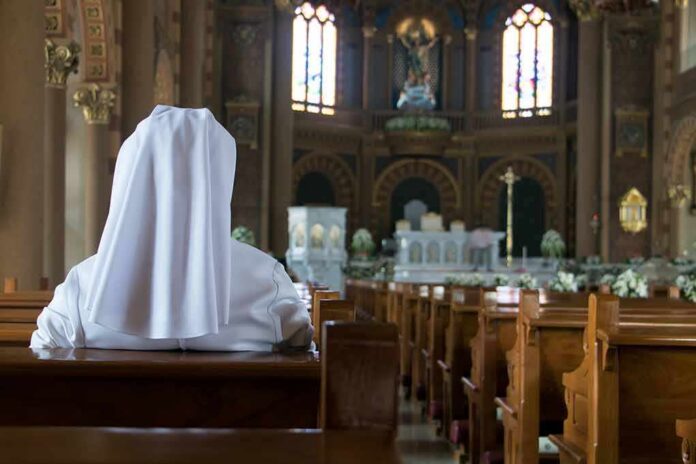
An official Vatican newspaper platform is elevating feminist commentary while new Holy See appointments pull more women into advisory posts.
Story Highlights
- The Holy See named several women religious as consultors to a key Vatican dicastery.
- Sister Maria Nirmalini received a five-year consultor term, formalizing her advisory role.
- The consultor slate includes multiple women, not a single token pick.
- L’Osservatore Romano hosts Women Church World, an official venue for women’s commentary.
Vatican Appoints Women Religious as Official Consultors
The Holy See announced new consultors to the Dicastery for Institutes of Consecrated Life and Societies of Apostolic Life on August 6, 2026. The list included several women religious named to advise the office for a five-year term. The Vatican press bulletin and dicastery notice recorded the appointments as official acts, confirming their standing in Church governance. These consultors provide expertise to leaders who guide religious life across the world.
The International Union of Superiors General highlighted the women religious on the consultor slate. The group named Sister Patricia Murray, Sister Chiara Lorenzato, Sister Maria Nirmalini, Sister María Rosaura González Casas, Sister Mary (Makamatine) Lembo, and Sister Maria do Disterro Rocha Santos. Their inclusion shows that the Holy See sought broad input from experienced superiors and scholars, not a symbolic add-on. The move signals an intent to hear women’s perspectives on formation, governance, and service in consecrated life.
Who Was Named and What the Role Means
Sister Maria Nirmalini, Superior General of the Apostolic Carmel, was appointed a consultor for the 2026–2031 term. Catholic outlets in India and the Vatican dicastery notice identified her role and timeline. As a consultor, she is tasked with offering counsel, research, and review on questions tied to religious institutes. Consultors do not legislate doctrine or issue binding decrees. They help leaders study issues and shape well-informed recommendations for decisions.
Church reporting explains that consultor positions are advisory by design. They bring voices from the field into Rome without changing who teaches and who governs. That structure helps explain why each new consultor wave draws mixed reactions in media. Supporters see real inclusion. Critics see symbolic steps. The pattern has repeated for years across dicasteries as women join advisory bodies while doctrine remains set by teaching authority, not by consultants.
Women Church World and the Boundaries of Influence
L’Osservatore Romano, the Vatican’s official newspaper, maintains Women Church World as an ongoing editorial space. The section offers women’s writing, features, and commentary within an official venue. Its presence shows an institutional channel for women’s reflection in Church life. It does not, by itself, carry magisterial authority. Editorial content can shape discussion, but only formal teaching documents define doctrine for the universal Church.
We celebrate a milestone!
Lucy Afandi Esipila, the Regional Coordinator for Caritas Africa was appointed a Consultor (expert adviser), to the Dicastery for Promoting Integral Human Development, by Pope Leo XIV. @VaticanIHD @Followers pic.twitter.com/gfBfxCfV4g— Caritas Africa (@AfricaCaritas) August 22, 2026
The current facts establish women’s rising presence in advisory seats and in official media spaces. The appointments were recorded by the Holy See. The editorial platform is hosted by the Vatican newspaper. What they do not establish is a change to doctrine. No magisterial text on the devil, original sin, or past witch hunts was cited or issued with these moves. The consultors and editors influence debate, but they do not set Church teaching by appointment or by article.
Why This Matters to Conservative Readers
American readers care when powerful institutions shift tone or process. When an official paper boosts feminist frames, and Rome seats more women advisers, the direction of debate inside the Church can move. That matters for parents, pastors, and schools tied to Church life. It shows how culture debates seep into faith spaces. Clear lines still stand: doctrine changes only through proper authority. Advisory roles and op-eds can press the edges, but they are not the rulebook.
What Comes Next
Watch the dicastery’s studies and guidance in coming years. Track whether consultor input affects policies on formation, safeguarding, and governance in religious institutes. Follow Women Church World articles to see which topics rise. Compare any strong claims with the Catechism and official documents. Those steps help readers separate robust debate from actual teaching. For now, the record shows formal appointments, an official editorial venue, and no new doctrine attached to either.
Sources:
lifesitenews.com, infovaticana.com, mattersindia.com, aimintl.org, osservatoreromano.va