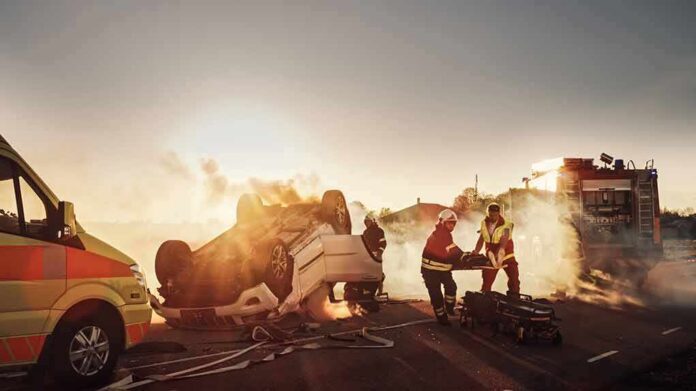
Heavy rain and drivers going too fast turned I-15 into a crash zone, sending families to the hospital.
Story Snapshot
- Utah officials say rain and excessive speed triggered a four-vehicle crash on I-15.
- Seven people were hospitalized, including a critically injured toddler, according to reports.
- State safety data link wet roads and speed to higher crash risks nationwide.
- Troopers urge slower speeds, longer following gaps, and working wipers and tires in storms.
Officials Describe Chain-Reaction Crash In Heavy Rain
Utah’s Department of Public Safety reported a four-vehicle collision on northbound Interstate 15 near 12500 South on September 15, 2024, at 8:14 p.m. The agency said it was raining hard and the road was wet when a Range Rover, traveling too fast for the conditions, lost control and spun, setting off a chain reaction with other vehicles. A Utah news report said seven people were taken to area hospitals, including a toddler who was critically hurt.
Utah Highway Patrol personnel at the scene described a rain-slick highway, limited traction, and drivers who did not slow down. A local outlet, citing a highway patrol agent, reported that investigators believe speed likely played a role in the first loss of control before the impacts with other vehicles. Officials often stress that even a small cut in speed during storms can prevent spinouts and rear-end crashes by giving tires and brakes more grip and space to stop.
Wet Roads And Speed Are A Known Danger Combination
Federal Highway Administration data show most weather-related crashes happen on wet pavement and during rainfall. Each year, about three out of four weather-related crashes occur on wet roads, and nearly half occur while it is raining. The National Highway Traffic Safety Administration’s 2023 figures show speeding was a factor in 22 percent of fatal crashes on wet roads, compared with 18 percent on dry roads. Those numbers track with what Utah troopers describe in rainstorms: less time to react and more sliding when drivers do not slow down.
Researchers have also found precipitation itself raises risk. A peer-reviewed study estimated a 34 percent higher chance of a fatal crash during falling precipitation, with heavier rates linked to more danger. Those findings match field reports from troopers who see drivers follow too closely, rely on worn tires, or drive at dry-weather speeds in the rain. In Utah, other recent I-15 pileups have also listed “too fast for conditions” and wet pavement among the first factors noted by state officials.
Practical Safety Steps Drivers Can Take In Storms
Troopers advise simple steps that pay off fast. Drivers should slow down, leave more space, and turn on headlights with wipers. Tires need enough tread to push water out from under the contact patch; thin tread raises the chance of hydroplaning. The Federal Highway Administration notes normal safe speeds often must drop on wet pavement, sometimes by double digits, to keep stopping distances in a safe range. These choices reduce the chance of a first spin that can trigger a multi-car crash.
CHAIN REACTION CARNAGE ON I-15 🚗💥
Utah Highway Patrol troopers and medical personnel were already handling a rollover accident on I-15 when excessive speed and heavy rain triggered a brutal secondary crash into parked police cruisers.
Right after that initial impact, another…— Maria Mel (@Mariamelx58) August 24, 2026
Families on busy corridors like Interstate 15 depend on other drivers to act with care. Rain turns small mistakes into big wrecks when speeds stay high. State patrols and emergency crews do their part by closing lanes and clearing scenes quickly, but the first line of defense is the right foot. Slowing 5 to 10 miles per hour in heavy rain, easing into lane changes, and checking tires before a trip can keep a wet highway from becoming a hazard to your family and everyone around you.
What This Means For Utah Commuters
Utah’s growth puts more vehicles on the same pavement, which shrinks margins when weather turns. This crash shows how one spin can stack up cars in seconds on a crowded freeway. Data and field reports point to the same fix: match speed to conditions and build space. When storms hit, safer choices protect your liberty to travel, your family’s well-being, and your neighbors on the road. That is common-sense responsibility we can all share, rain or shine.
Sources:
facebook.com, leadstory.com, dps.utah.gov, stgeorgeutah.com, yahoo.com, ops.fhwa.dot.gov, highways.dot.gov, aaafoundation.org