As Kīlauea’s summit eruption shifts again, five new vents opened inside the national park while the alert stays at Watch.
Story Highlights
- U.S. Geological Survey says the eruption remains confined to Kīlauea’s summit inside Hawaiʻi Volcanoes National Park.
- Officials report five new vents on or near Halemaʻumaʻu’s northwest wall, with small lava flows.
- Volcano Alert Level is Watch and the Aviation Color Code is Orange amid ongoing tremor and vent activity.
- Local coverage shows repeated “precursory overflows” and pauses as pressures rise and fall.
What Officials Confirmed About The Eruption
The U.S. Geological Survey said the current eruption activity is limited to Kīlauea’s summit inside Hawaiʻi Volcanoes National Park. Scientists kept the Volcano Alert Level at Watch and the Aviation Color Code at Orange. That means hazards are present but contained, and pilots should be aware of possible ash or gas above the crater. Officials stressed that all recent activity remains in the summit region and not on the flanks where towns lie.
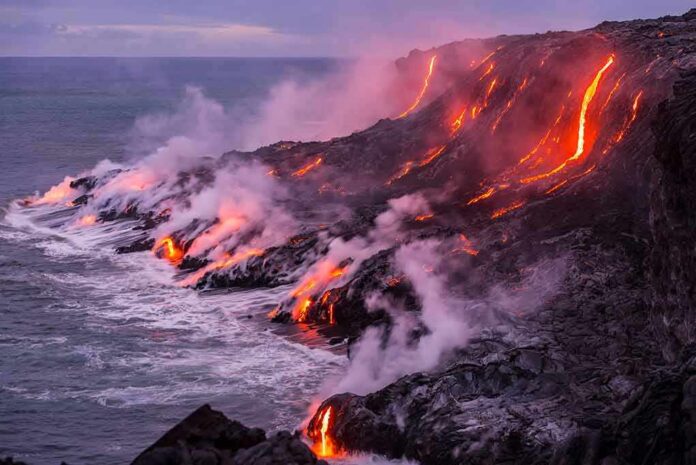
Agency updates also confirmed a notable change on September 16. Five new vents opened on or near the northwest wall of Halemaʻumaʻu crater. These vents produced small lava flows, while spattering continued from the north vent and occurred in bursts from south and west vents. Monitors showed stalled summit inflation and rising tremor, signs that magma is active but the system is adjusting underground.
How The Eruption Is Behaving Day To Day
Local reports described waves of “precursory overflows” inside the summit crater. These overflows started and stopped as the volcano inflated and deflated, which is common at Kīlauea. On some days, activity paused during summit deflation. On other days, overflows resumed when pressure built back up. The pattern shows an eruption that is on, but pulsing, as vents open, spatter builds small cones, and short lava flows spill onto the crater floor.
Later in the month, coverage noted continued overflows from the north vent and a highly pressurized summit. That matched the government signals of Watch and Orange, which mean scientists expect changes but do not see broad spread of lava outside the crater. The back-and-forth nature of the overflows, and the occasional pauses, reflect a pressurized system releasing energy in short bursts rather than a sustained, high fountain phase.
Why The Alert Levels Matter For People And Planes
The Watch alert tells people that hazards exist at the summit, such as hot lava, gas, and sharp rock. The Orange aviation code alerts pilots that ash or gas could affect air near the volcano, even if lava stays in the crater. These codes guide park managers, tour operators, and airlines to plan safely. They also help residents and visitors avoid risky areas while still allowing access to many parts of the park when conditions permit.
Scientists track tremor, ground inflation, gas, and vent changes to decide whether to raise or lower alerts. When tremor increases and new vents open, officials may warn about new hazards near the crater rim. When deflation pauses the flow, officials still keep watch because pressure can rebuild. The formal, step-by-step updates may feel slow next to live video, but they provide the shared language that emergency crews and the public use to act early and avoid harm.
What Media And Live Feeds Show Versus What Instruments Say
Local video and reports focus on striking moments, like glowing vents and small lava overflows. These images help people see real change, but the scientific record builds from instruments and daily logs. During past eruptions, the U.S. Geological Survey used social media to answer questions and push clear hazard advice. That approach continues today, blending live visuals with careful, staged alerts so people do not mistake pauses for an ending or a burst for a crisis moving outside the summit.
For families, workers, and small businesses, the key point is simple. The eruption is active, and it is changing, but it remains inside the summit. Plan visits and flights using official alerts. Use live streams for awareness, not for final judgment. When agencies keep the codes at Watch and Orange, it signals respect for risk without panic. That balance serves the public best, especially when trust in big systems often feels thin across the country.
Sources:
youtube.com, bigislandvideonews.com, volcanoes.usgs.gov