
Poland just told its fighter pilots they can fire based on radar and command authorization, not a cockpit eyeball.
Story Snapshot
- Poland will shift from visual checks to “positive identification” using radar and other data.
- The rules cover drones, missiles, and any objects violating Polish airspace, not just planes.
- The Operational Commander issues prior authorization so pilots can act fast when threats appear.
- Recent border incidents and Russian activity pushed Warsaw to speed up decisions.
Warsaw moves from peacetime habits to wartime speed
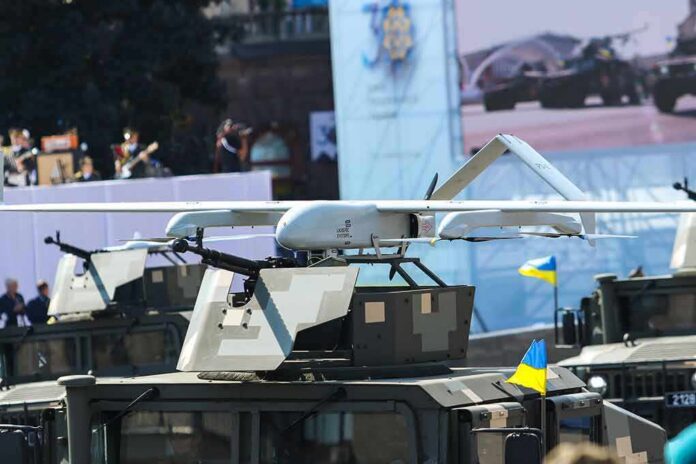
Deputy Defense Minister Cezary Tomczyk said Poland will replace peacetime visual identification with “positive identification,” which uses radar and other information to judge a threat. He said pilots or the Operational Commander could decide to open fire based on those inputs when an object violates Poland’s airspace. Reports add that this shift applies to drones, missiles, and other airborne objects, not just manned jets. The point is clear: modern threats move too fast to wait for a fly-by check.
Officials describe a tighter command chain to back that speed. Tomczyk said the head of the Operational Command will issue a prior authorization order each time, so surface air defenses and aircrews have legal cover to shoot the moment a violation occurs. That creates a formal on-ramp: sensors detect, the commander authorizes, and defenders engage. This is not a free-fire zone. It is a structured green light tied to sensors and a named decision-maker. That matches how responsible militaries should act.
Why now: repeated violations and a hot neighborhood
Polish leaders have watched a steady drip of incidents at their edge. Reports said a Russian military helicopter briefly crossed into Poland and was tracked by radar. Warsaw also scrambled jets during Russian strike surges near Ukraine, pushing air-defense crews to high alert. Defense Minister Władysław Kosiniak-Kamysz earlier vowed that every provocation would meet a rapid reply from Polish pilots, signaling the policy path that now arrived. These events made slow, visual-first rules look out of step with today’s tempo.
Poland’s change fits a wider pattern across the North Atlantic Treaty Organization’s eastern flank. Since 2022, allies facing waves of drones and missiles have moved toward faster, sensor-fusion engagement. The goal is to stop small, fast, or unmanned threats before they hit a town or a depot. Positive identification rests on multiple inputs, not a single radar blip. That approach aims to cut mistakes while still moving at the speed of danger. Poland is making that logic standard practice.
What “positive identification” means in practice
Positive identification does not mean “shoot at anything on screen.” It means confirm a specific target as a threat using all available information. That can include radar tracks, flight behavior, no-fly zones, and command intelligence. Tomczyk’s remarks point to a data-led decision by the pilot or the Operational Commander when an object violates airspace and meets threat criteria. Reports describe this as replacing the older visual rule, especially for drones and missiles where a look is often impossible before impact.
Poland has introduced special wartime defence measures allowing its fighter aircraft and helicopters to shoot down foreign aircraft detected by radar, according to Deputy Defence Minister Cezary Tomczyk. The new rules allow pilots or operational commanders to make the decision…
— Third Column (@ThirdColumn) September 28, 2026
The chain of command matters for risk and accountability. Prior authorization from the Operational Commander creates a clear ledger of who decided and why. That guards against snap errors and limits the chance of political second-guessing after a shoot-down. From a conservative viewpoint, this balances deterrence with duty of care. It gives defenders the tools to act fast while keeping a human responsible for the call. That is common sense in a border state under pressure.
What to watch next
Expect near-term drills and communications checks between pilots, air-defense batteries, and the Operational Command. Seamless timing is the difference between a safe intercept and a headline. Watch how Poland defines “other information” beyond radar in briefings. That will show how broad the evidence set is for a green light. Also track whether allied data feeds factor into decisions. That would match the alliance’s push to share tracks faster along the frontier.
Sources:
insiderpaper.com, news.liga.net, stripes.com, x.com, bbc.com, grosswald.org, mezha.net