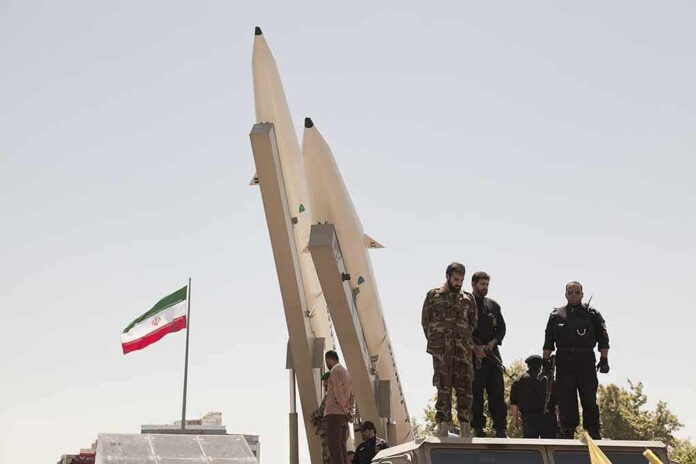
The central fact is not that Iran and the United States reached peace; it is that both sides stepped back just enough to keep diplomacy alive while preserving the option to escalate again. Iran’s halt was framed as conditional and retaliatory, and President Trump’s pause created the breathing room that made that framing possible.
Key Points
- Iran said it would stop retaliatory strikes only while the U.S. pause holds, making the move tactical rather than final.
- President Trump paused U.S. strikes to allow more time for diplomacy, according to the U.S. ambassador to the United Nations.
- The language from Tehran and Washington points to leverage, not trust: each side is signaling restraint without surrendering its core demands.
- This pattern fits a familiar U.S.-Iran dynamic, in which temporary de-escalation is easier to achieve than durable settlement.
Why the Pause Matters More Than the Headlines Suggest
What happened here is a classic crisis-bargaining pause. Iran’s military spokesperson said Tehran had halted its retaliatory actions after the Americans stopped their attacks, and the Iranian position was reported as “attack for attack”: if the strikes stop, Iran stops too. Reuters reported the same basic logic from an Iranian source who described the pause as tactical rather than genuine, a formulation that matters because it captures the underlying structure of the exchange: reciprocity under pressure, not reconciliation.
That distinction is the whole story. A ceasefire implies an agreed political endpoint; a pause implies an operational lull. In this case, the reporting consistently shows the latter. The United States stopped its attacks for a second straight day, Tehran matched that pause, and both sides kept the door open to renewed action if the other side resumed fire. In other words, the immediate gain was not peace but time.
How the Two Sides Reframed the Same Battlefield
Washington’s language was deliberately calibrated. The U.S. ambassador to the United Nations said President Trump had paused strikes to allow more time for diplomacy, and other coverage echoed the line that Trump was giving talks “some breathing room.” That phrasing is important because it places the administration’s decision inside a negotiation frame, not a surrender frame. It signals that military pressure remains available, but is being held in reserve while intermediaries work.
Tehran used equally careful language. Iran did not announce a peace agreement, a settlement, or an end to confrontation. It said, in effect, that its retaliatory posture was suspended so long as the U.S. pause continues. That is not semantic trivia. In the Middle East, phrasing like this is how states preserve deterrence while avoiding the political cost of appearing to back down. The message to domestic audiences is firmness; the message to adversaries is conditional restraint.
The Real Mechanism: Reciprocal Restraint Under Mediation
The broader reporting shows a familiar mechanism at work: reciprocal restraint backed by third-party mediation. Coverage cited Oman, Qatar, and Pakistan as active intermediaries, and that matters because such channels are often what make short-lived pauses possible even when the parties still disagree on fundamentals. These are not breakthrough talks in the classic sense. They are managed de-escalation, often improvised under combat pressure, designed to stop the next strike before anyone has solved the underlying dispute.
That is also why the reporting emphasizes the conditionality of the pause. One Reuters source said the dominant view was that the halt was tactical, not genuine, because Iran has “accumulated enough bitter experience” with what it sees as U.S. deception. Whether or not one accepts that characterization, the logic is clear: neither side is relying on trust. Both are relying on immediate incentives, visible pauses, and the prospect that diplomacy might buy more than another round of fire.
Why This Pattern Keeps Reappearing
U.S.-Iran crises routinely produce this kind of temporary stabilization because both governments have reasons to stop short of total rupture even when they are still locked in strategic conflict. Iran can claim it retaliated and then stood down once the enemy did; Washington can claim it created conditions for talks without abandoning pressure. That symmetry gives both sides something to show at home and something to trade abroad. It is an unstable equilibrium, but it is an equilibrium all the same.
The reporting you provided fits that long-standing pattern. Coverage described the conflict as having paused after nearly two weeks of strikes, with no new attacks overnight and with efforts continuing to bring the countries back to negotiations on an interim ceasefire deal. The word “interim” is doing real work there. It suggests the problem has not been resolved, only contained. And in this region, containment is often the best outcome available in the short run.
Tawazon: Iran has suspended its retaliatory strikes after the United States halted its attacks, bringing a pause to nearly two weeks of intense military exchanges across the Middle East.
According to Al Jazeera, Iran says the United States is “stuck and struggling” after five… pic.twitter.com/OA9RIMPq3C
— TAWAZON – توازن (@tawazon_media) July 27, 2026
What Trump’s Pause Reveals About the Bargaining Position
President Trump’s decision to stop the strikes for now does not mean Washington has softened its aims. The reporting around the pause points instead to a familiar strategic calculation: preserve leverage, reduce immediate risk, and see whether diplomacy can extract a better result than continued bombardment. In the same body of coverage, U.S. officials were still described as wanting broader strategic concessions, including limits tied to Iran’s nuclear and regional posture. The military pause was therefore not an endpoint; it was a negotiating instrument.
That helps explain why the atmosphere around the pause is cautious rather than celebratory. Even sympathetic reporting called the ceasefire fragile, and the facts on the ground support that judgment. Neither side has abandoned its core position. Iran still defines its response as retaliatory and conditional. Trump still has the option to reapply force if diplomacy stalls. The pause buys time, but it does not buy certainty.
What to Watch Next
The immediate question is whether the pause holds long enough for intermediaries to translate restraint into something more durable. If the U.S. continues to withhold strikes and Iran continues to mirror that restraint, the conflict may remain in a narrow channel of managed calm. If either side resumes attacks, the logic of reciprocity can reverse just as quickly. That is why this episode should be read less as a resolution than as a test of whether crisis diplomacy can outlast the incentives for escalation.
What makes this moment consequential is not its finality but its fragility. The two governments have not settled their dispute; they have merely discovered, again, that war is expensive enough to pause and politics ambiguous enough to permit it. In the U.S.-Iran relationship, that is often as close as the parties come to a breakthrough.
Sources:
insiderpaper.com, middleeasteye.net, aljazeera.com, chinadailyasia.com, thehindu.com, youtube.com, washingtontimes.com, facebook.com, english.ahram.org.eg, premiumtimesng.com