
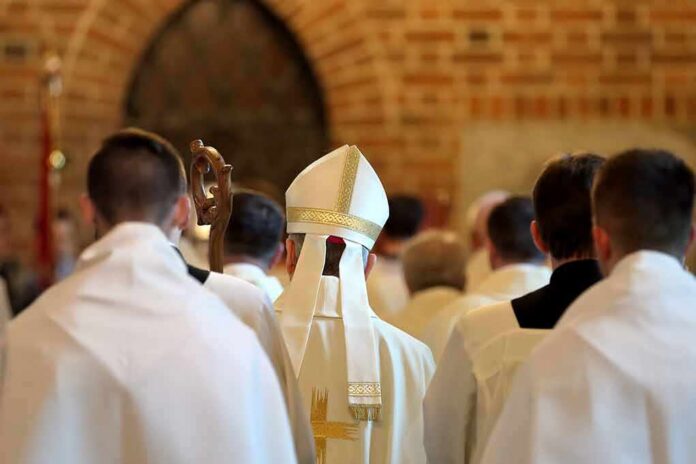
A viral video shows an Italian priest dancing in a cassock before an altar, igniting a fight over reverence, influence, and the line between worship and social media.
Story Highlights
- Priest’s dance at an altar draws sharp criticism over reverence and doctrine.
- Supporters cite youth outreach; critics warn of “liturgical cabaret.”
- Reports say the priest has hundreds of thousands of followers online.
- Diocese reassigned him to evangelization and communications work.
Viral Altar Dance Sparks Debate on Sacred Boundaries
Italian media and Catholic commentators reported that Don Roberto Fiscer appeared dancing in a cassock before an altar, with clips showing playful gestures near sacred space. Critics said this blurred the line between worship and entertainment and risked undermining reverence due to the altar. One advocacy post linked the priest to pro‑LGBT messaging, further fueling the reaction, though the full context of each video is not available in the record provided. The core facts concern the altar‑dance clips and the widespread attention they drew.
Commentary from Silere non possum accused Fiscer of turning worship into “liturgical cabaret,” and cited a clip aligning offertory gestures with a pop song. That outlet framed the videos as irreverent and confusing for the faithful. A separate report said a simulated consecration using a pop song struck some viewers as blasphemous. These reactions show why many lay people demand a clear line between prayer and performance inside a church.
What The Church Teaches About Dance And Liturgy
Guidance summarized by Catholic Answers says dance is generally not allowed in Latin‑rite liturgy because it can bring a profane or show‑like mood into worship. The resource distinguishes rare cultural devotions that occur outside the Mass from dancing added to the liturgy itself. It also says artistic ballet in church turns worship into a spectacle for onlookers, instead of prayer for participants. These principles explain why videos of dancing near the altar trigger swift pushback.
The teaching does not ban all joy or cultural expression. It does insist that the sanctuary remain a place of clear reverence, especially during the Holy Sacrifice of the Mass. That standard helps families, converts, and young people understand what is holy and why it matters. When influencers blur that standard, even with good intentions, they risk turning worship into content. Critics argue that is a poor trade, no matter the view count or viral reach.
Influence, Reach, And A Diocese’s Next Steps
Reports say Fiscer built a large audience on social platforms, connecting with youth through music, humor, and short videos. Coverage from RaiNews stated he would step away from his parish and move into diocesan communications and evangelization. That shift signals the Archdiocese of Genoa wants to channel his media skills within a formal structure. It does not by itself confirm that each past video matched liturgical rules, which remain the focus of critics’ concerns.
Other profiles highlight moments of charity and hospital outreach, alongside the sketches that made him known online. Supporters argue this shows pastoral intent, not mockery of the faith. Even so, the record available does not document measurable results from the altar‑dance clip itself. Follower counts prove reach, not spiritual fruit. For many faithful, the key question is simple: did the content respect the altar and the Eucharist? That answer depends on clear facts and diocesan guidance.
Why This Matters To Families Of Faith
Parents want churches that teach right and wrong, honor God, and guard children from confusion. They do not want worship turned into a stage or doctrine softened to fit trends. When clips show dancing near an altar, or when influencers promote ideas tied to the rainbow movement, people see a culture pushing into sacred ground. That concern is not about blocking outreach. It is about protecting truth and reverence so outreach leads souls toward God, not toward a brand.
South Sudan’s Bentiu Catholic Diocese has called on authorities to investigate a fire that damaged part of the altar at St. Michael Panriang Main Parish on Sunday, October 4, saying unknown people had set the church on fire.
The Parish Priest and parishioners intervened quickly,… pic.twitter.com/kRJXUijoks
— ACI Africa (@EWTNNewsAfrica) October 8, 2026
The path forward is clear. Church leaders should set firm guardrails for filming in sanctuaries and spell out what is permitted during or near the liturgy. Influencers who serve the Church should pair creativity with obedience and transparency. When lines are crossed, quick corrections help rebuild trust. Digital reach can serve the Gospel, but not by borrowing the world’s stagecraft at the altar. The message must be holy, and so must the medium that carries it.
Sources:
lifesitenews.com, clericalwhispers.blogspot.com, avvenire.it, famigliacristiana.it