A federal jury convicted Jonathan Rinderknecht in a streamlined federal retrial that tied him to the first spark behind the deadly Palisades disaster.
Story Highlights
- Jury found Rinderknecht guilty on two arson-related counts after a narrowed retrial.
- Prosecutors focused on the initial Lachman Fire, not just the later mega-blaze.
- The first trial ended in a 10–2 split favoring acquittal; the second jury convicted.
- Defense pointed to fireworks and missing physical proof of a lighter or accelerant.
Verdict Secures Federal Conviction After Earlier Deadlock
A federal jury in Los Angeles convicted Jonathan Rinderknecht on two arson-related counts linked to the Palisades catastrophe, after deliberating just over two days and reaching unanimous guilty verdicts on November 20, 2026. The decision followed a first trial that ended in a mistrial when jurors split 10–2 toward acquittal, a sign of how contested the case had been. The new verdict closes a high-profile chapter and assigns criminal blame for the initial spark that preceded a deadly wildfire.
Prosecutors charged destruction by fire and arson affecting property used in interstate commerce, after dropping an earlier timber-burning count from the first case. The revised path narrowed the issues, which the jury weighed against the defense story. Reporters noted that a juror cited Rinderknecht’s own interview with federal agents as persuasive, including his claim that he neither smelled fire nor saw fireworks before the first blaze erupted. Sentencing will follow standard federal procedures.
Revised Charges Centered on the Lachman Fire’s Spark
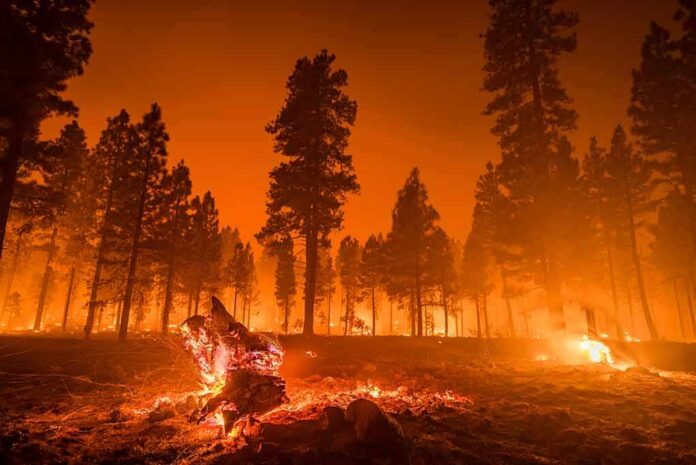
The government reframed its theory between trials to focus on the Lachman Fire, which ignited on January 1, 2025, with the larger Palisades Fire breaking out six days later. The superseding indictment split the case into two tighter counts and removed the timber charge, separating questions about the first blaze from the later destruction. This approach asked jurors to judge whether the initial fire was deliberately set and how it connected to later property impacts under federal law.
Coverage does not list a recovered lighter, accelerant test, or a single surveillance clip that directly shows ignition by Rinderknecht. That limit leaves open which specific exhibit or test tied intent and identity for jurors. Still, the panel judged the full record enough to convict beyond a reasonable doubt. The result shows that focused charges and jury instructions can overcome earlier confusion, even when experts disagree and evidence is largely circumstantial.
Defense Pressed Fireworks Theory and Questioned Forensics
Defense attorneys argued that New Year’s fireworks likely ignited the Lachman Fire and said the giant Palisades blaze was a separate incident set by someone else. Their expert, Thomas Guzman, a retired federal fire investigator, testified that fireworks were the most likely cause and that the government misidentified the origin area. Multiple witnesses described flashes and loud bangs near midnight, supporting the fireworks angle for jurors to consider.
BREAKING: Man Who Started Deadly Palisades Fire Found Guilty In Retrial | The Post Millennial
A federal jury convicted Jonathan Rinderknecht on Friday of two felony charges connected to the deadly Palisades Fire, reversing the outcome of an earlier trial in which most jurors had… https://t.co/YIlk6UMRHE
— Owen Gregorian (@OwenGregorian) November 22, 2026
The defense also said prosecutors lacked physical proof that a lighter started the fire, pushing back on federal origin conclusions and chain-of-causation claims. Rinderknecht told authorities he called 911 and stayed to help firefighters after seeing the blaze, details the defense cast as the actions of a witness, not an arsonist. Despite these points, jurors in the retrial found the government’s tighter case stronger than the competing fireworks narrative.
What This Means for Accountability and Public Safety
This conviction sends a clear message: deliberate fire-setting that threatens homes, families, and livelihoods will meet firm federal response, regardless of earlier trial outcomes. For residents who watched flames race through canyons and neighborhoods, the verdict brings accountability for the first spark that set tragedy in motion. It also highlights why precision in charging and evidence presentation matters when jurors sort complex ignition and causation questions under federal law.
Open questions remain about the exact forensic path that swayed jurors because public reporting does not include the full set of technical exhibits, laboratory results, or device records. That gap suggests next steps for transparency, including release of origin-and-cause materials where lawful. For families who lost so much, prevention now means strict enforcement, tougher penalties for arson, and policies that back firefighters, not agendas that downplay crime or fuel hazards.
Sources:
nbcchicago.com, gvwire.com, upi.com, spectrumlocalnews.com, nbclosangeles.com, nbcnews.com