
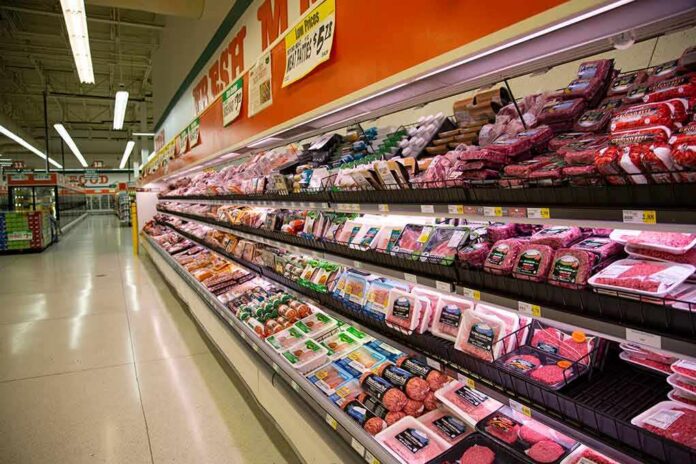
Someone reached into supermarket freezers across three countries without stepping inside a single store.
Story Snapshot
- Retailers in Belgium, Luxembourg, and Sweden reported overnight temperature changes in store coolers.
- Store statements call it an IT incident while probes continue; not all say “cyberattack” yet.
- A recent French case showed mass remote set-point changes and spoiled food across hundreds of stores.
- Legacy, internet-connected controllers present a plausible path to manipulate refrigeration settings.
What retailers said happened, and where
Chains in Belgium and Luxembourg said someone tampered with cooling-system temperature settings, and Swedish grocers reported overnight incidents at a limited number of locations. Delhaize described an IT incident across about 40 Belgian stores, and Carrefour Belgium reported problems at 15 sites while the cause was still under review. ICA said a limited number of Swedish stores were affected. Coop reported issues at six stores in central Sweden. These statements establish a clear pattern of abnormal temperature changes, clustered in time.
Authorities and companies have not confirmed a single culprit or a shared exploit. Delhaize said investigators were still working and did not claim a confirmed hack. ICA and Coop also avoided that label in early comments. That caution aligns with standard practice: teams collect logs, check controller histories, and track remote access before naming a cause. The public should read this as active triage, not a denial that remote tampering is possible or likely in connected systems.
Why remote freezer control is even possible
Modern supermarkets tie their refrigerators to central controllers. Those controllers feed data to monitoring software and allow remote set-point changes for efficiency and maintenance. The French incident last month showed how that power can be abused. Hundreds of stores saw temperatures raised in bulk. Investigators cited internet-accessible control gear and outdated firmware as weak points that let outsiders reach in and turn dials that should have stayed locked down.
Vendors and experts pointed to long-lived equipment with thin security layers. Many controllers were built years ago and never designed for the hostile internet. In the French case, coverage described older products no longer receiving security updates. That created a soft underbelly: exposed interfaces, default or weak credentials, and remote management paths that outlived their safe design window. When those pieces line up, a bad actor does not need to smash windows; they just log in and raise the heat.
Link to France: tempting, but not proven
Reports out of Belgium, Luxembourg, and Sweden echo the French pattern: synchronized timing, widespread temperature shifts, and operators pulling network plugs to stop further changes. But investigators have not tied these cases together. Retailers said they were still checking hardware models and logs. Outlets stressed that no firm technical bridge had been found between the three-country incident and the French attack. That is the responsible line until forensics close the gap.
Readers should separate two claims. First, remote manipulation of store refrigeration is technically plausible and documented in France. Second, the northern Europe disruptions may share that cause. The first claim stands on recent evidence. The second remains open. From a common-sense, conservative lens, the right posture is trust but verify: secure what you control today, and demand proof before declaring a grand, coordinated plot that spans borders.
Food safety, cost, and the quiet risk in every back room
Even short spikes in freezer or chiller temperatures can ruin meat, dairy, and vaccines. That turns a small set-point change into a big bill and a bigger health question. The French case already showed how fast those costs add up when systems defrost at once. Supermarkets face a bind: connect equipment to save energy and labor, or isolate it and lose efficiency. Many tried to split the difference and ended up with internet doors that never truly locked.
Imagine walking into a supermarket and discovering that its freezers have been remotely turned into ovens. 😳
That's reportedly what happened in Sweden, following similar cyberattacks on supermarkets across Europe
And this raises a much bigger question about the Internet of…
— sattvik (@Sattv1k) November 3, 2026
Practical steps land close to home. Inventory every controller. Remove direct internet exposure. Require multifactor logins for remote access. Update firmware if a secure path exists; if not, gate the device behind a well-managed network. Log every set-point change and send real-time alerts for out-of-range jumps. Test a “pull the plug” plan that cuts remote control without killing cooling. These are not nice-to-haves; they are the seatbelts for your cold chain.
Sources:
cphpost.dk, people.com, tallahassee.com, fortune.com