Cuba’s communist regime is raging after the United States finally moved to hold Raúl Castro criminally accountable for the 1996 shootdown of two unarmed civilian planes that killed four people, three of them American citizens.
Justice Department Targets Raúl Castro Over 1996 Shootdown
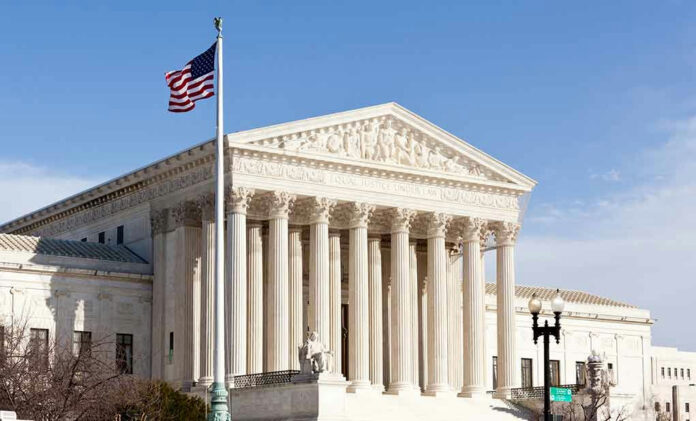
Federal prosecutors in Miami unsealed a superseding indictment charging former Cuban strongman Raúl Castro with one count of conspiracy to kill United States nationals, four counts of murder, and two counts of destruction of aircraft, all tied to the February 24, 1996 downing of two civilian Cessna planes flown by the Brothers to the Rescue group.[1] Reporting describes Acting Attorney General Todd Blanche announcing that the ninety‑four‑year‑old Castro will face these charges for his alleged role as defense minister directing the Cuban armed forces during the incident.[1][3]
News accounts state that the indictment focuses on the Cuban air force’s decision to fire missiles from fighter jets at unarmed humanitarian flights operated by Brothers to the Rescue, killing four men aboard: Armando Alejandre Jr., Carlos Costa, Mario de la Peña, and Pablo Morales.[1][3] Journalists say prosecutors allege the planes were outside Cuban airspace when they were destroyed, directly contradicting Havana’s long‑standing claim that they were defending their territory from repeated incursions.[1][3]
Alleged Castro Chain of Command and Evidence Gaps
Local Miami coverage reports that the indictment alleges Raúl Castro, serving as minister of the Cuban Revolutionary Armed Forces in 1996, “authorized the Cuban military chain of command to fire missiles at the planes” after meetings with senior officers about how to stop Brothers to the Rescue flights.[3] Another outlet cites investigators who previously concluded that both Raúl and Fidel Castro were involved in authorizing the coordinated operation that shot down the two civilian aircraft in international airspace.
A Scripps report quotes a figure tied to the case describing Raúl Castro as “one of the main architects of the crime” and saying he “slipped through the noose” during earlier prosecutions of lower‑level participants.[1] At the same time, available public materials do not reproduce the full indictment, underlying exhibits, or intelligence records, meaning outside observers are relying on summaries of what prosecutors say they can prove rather than directly reviewing command logs, intercepted communications, or sworn testimony that explicitly traces the order back to Castro.[1][3]
Cuban Regime Denounces Case as Political, Offers No New Facts
Cuban President Miguel Díaz‑Canel and state media quickly condemned the indictment, calling it a “political maneuver” and insisting there is “no legal basis” for the charges, while framing the 1996 shootdown as self‑defense against aircraft allegedly violating Cuban airspace.[2] One video report quotes Havana’s line that the United States case is “a farce based on lies to justify military aggression,” fitting a familiar pattern where the communist government paints any accountability effort as imperialist hostility rather than engaging specific evidence.
The Cuban government’s response, as reflected in the coverage, does not provide flight logs, radar records, or sworn accounts from pilots and commanders contradicting the indictment’s claim that the aircraft were outside Cuban territory or that Raúl Castro was part of the authorization chain.[3] Reports also do not show any personal statement from Castro directly denying that he approved deadly force; instead, the rebuttal rests on broad accusations about United States motives, leaving the factual allegations largely unanswered in the public record.[1]
Why This Matters for American Sovereignty and Victims’ Families
For Cuban‑American families and many conservatives, this case is not about abstract geopolitics; it is about whether communist rulers can murder Americans with impunity and hide behind slogans of “revolution” for thirty years.[1] Brothers to the Rescue was widely described as a humanitarian group that helped Cubans fleeing on makeshift rafts, embodying the very pursuit of freedom that Havana’s dictatorship fears.[3] The indictment signals that under the current Trump administration, the Department of Justice is willing to reopen old wounds to defend United States citizens and confront hostile regimes.[2]
At the same time, reports acknowledge serious practical limits: Cuba does not extradite its leaders, Raúl Castro is elderly and appears to remain on the island, and nearly three decades have passed since the attack.[1][3] That delay raises hard questions about evidence preservation and witness availability, which is why some observers warn against treating the indictment as purely symbolic while others see it as a necessary act of moral clarity, even if Castro never physically appears in an American courtroom.[1][3]
Sources:
[1] Web – Raúl Castro indicted in 1996 shootdown that killed Americans
[2] Web – US Charges Former Cuban leader Raúl Castro in 1996 Aircraft …
[3] Web – U.S. indicts Raúl Castro over 1996 fatal shootdown of Brothers to the …