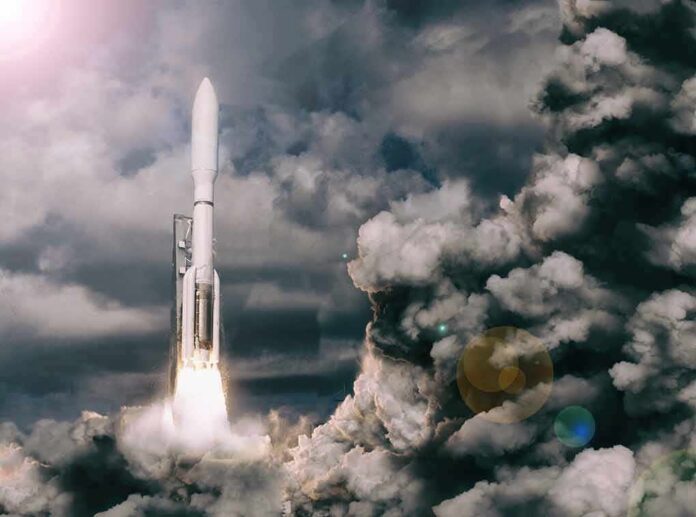
A United Launch Alliance Vulcan rocket failed about 10 minutes after liftoff, and the Amazon Leo mission did not reach orbit.
Story Highlights
- United Launch Alliance confirmed an in-flight anomaly and a failed delivery to orbit.
- The rocket carried 40 Amazon Leo broadband satellites from Cape Canaveral.
- The event marked a high-profile setback during Vulcan’s return to flight.
- The company has not yet identified a technical cause for the failure.
What ULA Confirmed About The Failed Mission
United Launch Alliance said its Vulcan rocket experienced an anomaly about 10 minutes after launch from Space Launch Complex 41 at Cape Canaveral on November 15, 2026. The company stated the mission “failed to deliver the Amazon mission to orbit,” confirming the payload did not reach its planned path around Earth. Reports identify the payload as 40 Amazon Leo internet satellites, which were set for low Earth orbit before the anomaly interrupted the flight plan.
United Launch Alliance did not offer a technical cause in its first statements. The company said it lacked specific data so soon after the event, which kept the focus on the confirmed facts: an in-flight anomaly and a mission that did not reach orbit. This approach matches standard launch-incident practice, where providers confirm a problem first and release technical findings after a formal review of telemetry and hardware data.
How The Failure Fits Commercial Spaceflight Risk
Commercial launches carry known risk, even with modern rockets. Federal Aviation Administration analysis has put historical commercial launch failure rates in the several‑percent range, which shows that incidents, while not common, are expected across a large number of flights. Insurance experts also treat launch and the first year in orbit as the riskiest phase of a satellite’s life, which is why many policies cover “launch plus one” year for added protection.
The scale of Amazon’s plan made this incident stand out. This mission was part of a broader effort to deploy a large internet satellite network. Coverage noted this was a headline setback for Vulcan’s return-to-flight effort and for Amazon’s deployment schedule. Those business pressures will shape how both companies adjust manifests, swap vehicles if needed, and work with insurers on loss and replacement strategies, which are common steps after a launch failure.
Why The Stakes Extend Beyond One Launch
Amazon’s 40 satellites were intended to expand broadband service from low Earth orbit. Losing a full batch in one launch can slow rollouts and push customers to wait longer for coverage. It can also increase costs as companies build replacement spacecraft and rebook flight slots. These ripple effects are standard in a crowded launch market, where schedules and insurance capacity must absorb sudden losses and then reset for the next attempt.
BREAKING: A ULA Vulcan rocket failed shortly after liftoff from Florida, destroying its payload of 40 Amazon Leo satellites, according to Reuters. It is the launch company's first mission failure.
— WorldUnfiltered (@WorlUnfiltered) November 16, 2026
United Launch Alliance will likely conduct a detailed investigation before its next Vulcan flight. That work often studies propulsion, guidance, and software data to find the root cause and apply fixes. Until the company releases those results, the firm’s confirmed facts remain clear: an anomaly ended the mission early, and the Amazon payload did not reach orbit. Those points define the event today while the technical story is still being built from post‑flight data.
Sources:
pembrokepinesflnews.com, spaceflightnow.com, orlandosentinel.com, perthnow.com.au, arcamax.com, faa.gov