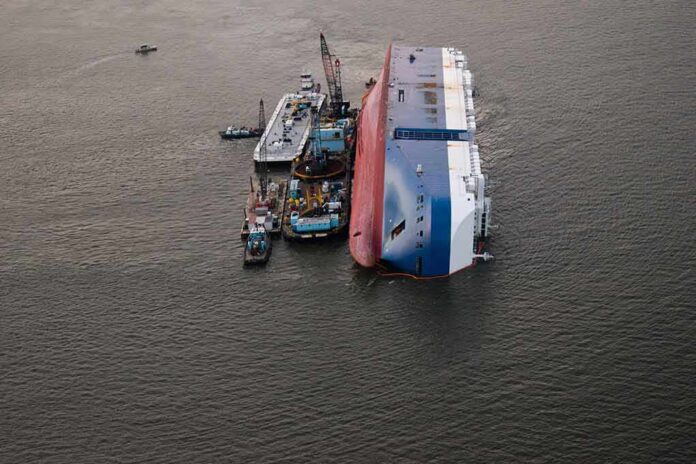
A fully loaded tanker slammed into a docked river cruise ship in New Orleans, sending the boat over on its side as rescuers pulled everyone to safety.
Story Highlights
- City officials said the tanker Atlantic Asphalt struck the American Heritage around 12:30 p.m. at the Port of New Orleans.
- The riverboat took on water and overturned; every person was accounted for and no one died.
- Officials reported 32 people went to hospitals, with no critical injuries, echoing media reports.
- Leaders cited an apparent steering problem or loss of control on the tanker; the cause is still under investigation.
Collision And Immediate Rescue
City of New Orleans officials said the northbound Atlantic Asphalt hit the American Heritage while it was docked and passengers were starting to get off at about 12:30 p.m. The riverboat began taking on water and then overturned next to the pier. First responders moved fast with boats, dive teams, and medics. The city confirmed everyone was accounted for and there were no deaths. Officials said 32 people went to local hospitals and none were in critical condition.
Mayor Helena Moreno said the tanker lost control before impact, while a United States Coast Guard official described an apparent steering issue. Trade and local outlets reported the tanker may have lost power or steerage near the Crescent City Connection bridge before striking the riverboat. Reporters on scene and industry sources aligned on the time, location, and sequence of collision, flooding, and capsize, while investigators worked to confirm the technical failure behind it.
What We Know About The Vessels
The American Heritage is a paddlewheel river cruise ship operated by American Cruise Lines. The vessel was moored at a Port of New Orleans dock on the Mississippi River when the incident began. The Atlantic Asphalt is a commercial tanker that was moving upriver. WorkBoat, a maritime outlet, reported the riverboat capsized and sank after the strike, consistent with the city’s account. The precise failure mode on the tanker has not been determined and remains under review by authorities.
Media and officials gave different headcounts for how many people were aboard the riverboat at the time. Some outlets cited about 180 to nearly 200 passengers and crew, while other summaries referenced a smaller total. The city’s update focused on life safety, confirming everyone was found and that 32 people were transported for treatment. Officials did not publish injury types or a passenger and crew manifest in the initial reports.
Accountability, Safety, And Next Steps
The United States Coast Guard leads casualty investigations on navigable waters. Those reviews often find more than one cause, such as equipment problems, human error, and river conditions. Coast Guard and industry data show many reportable incidents happen each year across the inspected passenger fleet, though large loss of life is rare. The New Orleans outcome fits that pattern: a dramatic event, rapid response, and no fatalities, pending a full technical review and any safety advisories that follow.
⚠️ JUST IN
No one was killed after a tanker struck and capsized the American Heritage river cruise ship on the Mississippi River. New Orleans Mayor Helena Moreno called the outcome a "miracle" and said the captain stayed aboard until everyone else had evacuated. The captain was… pic.twitter.com/7uaUn5URIN
— DC_Global_News (@DC_Global_News) November 14, 2026
For families and travelers, the key facts are clear. The tanker hit a docked cruise ship in daylight at a busy port. The riverboat overturned, yet every person was rescued. Local responders, port teams, and federal partners delivered a win for life safety. Investigators will now track data from the ships, pilots, and port to determine whether steering, power, or other issues triggered the crash. Until that report is released, officials have not assigned a final cause.
Why This Matters To Readers
Americans expect safe travel, honest reporting, and accountable operators. This case shows why strong local response and clear chains of command matter more than spin. City leaders put facts first: time, place, outcome, injuries, and the search total. Conservative readers should demand the same from every level of government and industry. When agencies share verified details, crews train well, and gear works as designed, people live. That is the standard worth defending on every river and coast.
Sources:
youtube.com, abcnews.com, wwno.org, workboat.com