Washington’s own human-rights officials carved a genital-based exception while fighting a Christian women’s spa that is now asking the Supreme Court to protect female-only nude spaces.
Story Highlights
- Olympus Spa petitioned the Supreme Court after losing in lower federal courts.
- The spa’s rule is anatomy-based for communal nude areas, not about sexual orientation.
- Washington later issued a narrow genital-based exception for nude-required spaces.
- The Ninth Circuit called the state’s action a straightforward use of its anti-bias law.
Christian-Owned Women’s Spa Seeks High Court Review of Anatomy-Based Policy
Olympus Spa, a Christian-owned Korean-style women’s spa with communal nude facilities in Washington, has asked the Supreme Court to hear its case. The spa says it admits only customers without male genitalia to nude spaces for privacy, modesty, and religious reasons. The petition argues that the Washington Law Against Discrimination forces the spa to abandon a women-only, anatomy-based policy, and it raises claims under free exercise, free speech, association, and public-accommodations law.
The spa’s filing stresses a simple point: the rule turns on visible anatomy in a communal nude setting. It does not target sexual orientation. The filing states the “entry policy focuses not on sexual orientation but on whether an individual has male genitalia.” This framing sets up a direct legal question. Does a state public-accommodations law control access rules based on anatomy in a nude, sex-segregated space without violating constitutional protections?
Ninth Circuit Ruling Sets the Stage for Constitutional Clash
The United States Court of Appeals for the Ninth Circuit ruled against the spa last year. The court described the enforcement action by Washington’s Human Rights Commission as a straightforward application of state law. That law defines sexual orientation to include gender expression or identity and covers public accommodations. The panel treated the policy as discrimination against pre-operative transgender women and allowed the state to require the spa to drop its “biological women only” rule.
The Ninth Circuit also rejected the spa’s speech and religious-coercion claims. The court said the state targeted discriminatory conduct, not belief. It held that the remedy limited any speech restriction to what was essential to stop that conduct. That framing makes the constitutional path steeper for the spa. The petition now asks the Supreme Court to decide if the Constitution protects anatomy-based female-only nude spaces from that state reading and remedy.
Washington’s Narrow Exception Underscores the Nude-Privacy Problem
Amid this dispute, Washington’s Human Rights Commission adopted a narrow rule that addresses places where nudity is required. The rule says that if nudity is a central purpose of the business, entry to spaces where nudity is required may be based on genital characteristics. This carveout is limited and does not resolve the broader constitutional claims. But it shows officials recognized the unique privacy issues in full-nude, sex-segregated rooms.
The exception sits in tension with the earlier enforcement posture. On one hand, the state pressed the spa over excluding pre-operative transgender women. On the other hand, the state now allows genital-based entry rules in rooms where nudity is required. The Supreme Court petition argues that such anatomy-based rules are common sense in nude settings and should stand on firm constitutional ground, especially for a faith-owned business serving women.
Why This Case Matters for Faith, Privacy, and Women-Only Spaces
This case could set a national marker for female-only nude spaces and for religious liberty in public accommodations. A ruling for the spa could affirm that businesses with communal nudity can set anatomy-based entry rules to protect bodily privacy and modesty. A ruling for Washington could expand the reach of public-accommodations law over sex-segregated services, even when nudity is central to the service. The petition notes seasoned constitutional counsel backing these arguments.
Conservatives see a basic principle here. Women deserve private, safe, and respectful spaces, especially when fully nude. Faith-based owners should not be forced to surrender beliefs about sex and modesty to keep their doors open. The Supreme Court now has a clean record to review. The justices can decide whether the Constitution shields an anatomy-based policy in a women’s nude spa from state enforcement that treats it as illegal bias.
What Comes Next at the Supreme Court
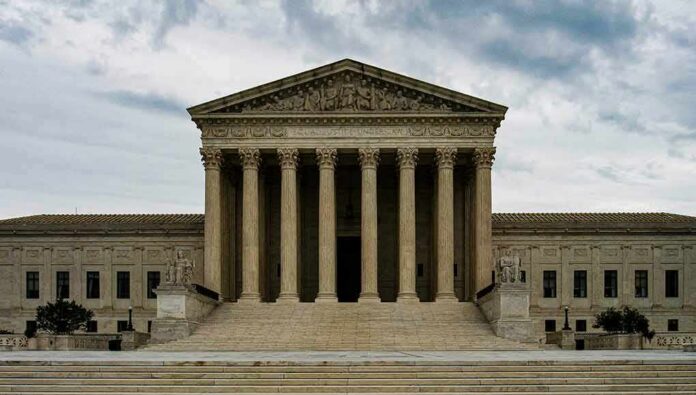
The petition is on the docket, but the Court has not agreed to hear it. If the justices take the case, briefing would address the Free Exercise Clause, compelled speech, freedom of association, and how public-accommodations laws apply in nude, sex-segregated settings. If the Court declines, the Ninth Circuit ruling will stand in the West. That would leave faith-owned and women-focused businesses with fewer options to protect anatomy-based privacy rules.
Until then, the carveout for nude-required rooms hints at a path forward for common-sense privacy. But only the Supreme Court can settle whether the Constitution protects a women’s spa that defines female-only nude spaces by objective anatomy. Many women, mothers, and daughters want that answer now. They want to know that when the sign says “women,” it still means what it has always meant.
Sources:
townhall.com, supremecourt.gov, seattletimes.com, them.us