
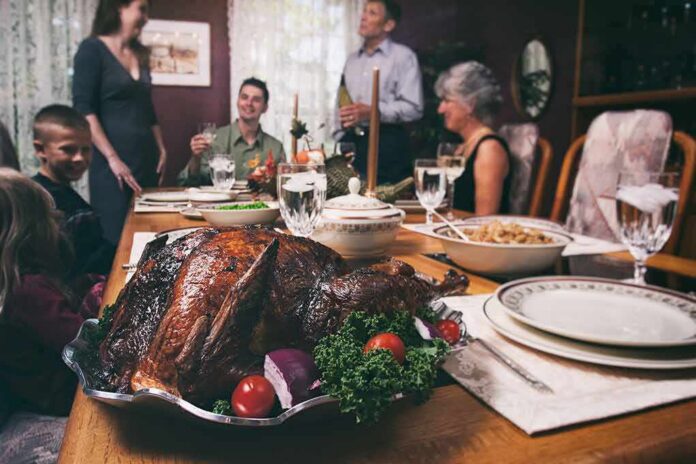
The sink is not a shower for your turkey; it’s a launchpad for germs you cannot see.
At a Glance
- Washing raw turkey spreads bacteria around your kitchen, not off the bird.
- Heat, not rinsing, makes turkey safe: cook to 165 degrees Fahrenheit in three spots.
- Keep raw turkey and its juices away from ready-to-eat foods to stop cross-contamination.
- Clean hands, tools, and surfaces with soap and water after handling raw turkey.
Why the Sink Turns One Bird Into a Kitchen-Wide Mess
United States Department of Agriculture guidance says do not wash raw poultry. Rinsing cannot remove bacteria fixed to the skin and crevices. Water splashes fling microbes to the sink, counters, utensils, clothes, and nearby food. That spread is called cross-contamination, and it raises the odds that cold dishes, like salads or rolls, will pick up harmful germs. This is not guesswork. Food safety teams define cross-contamination and warn that juices from raw meat or poultry drive it.
Many home cooks still wash birds out of habit or because a relative always did it. Surveys show the behavior is common. That is why the message needs to be blunt: keep the bird out of the sink. Set the turkey on a tray. Pat dry with paper towels if you want better browning. Then throw those towels away. Touch as few items as possible until you wash your hands and clean the area.
The Only Test That Matters: 165 Degrees, Checked Three Ways
Safe turkey is about final temperature, not a ritual rinse. The Food Safety and Inspection Service states that a whole turkey is safe when it reaches 165 degrees Fahrenheit as measured with a food thermometer. Check the thickest part of the breast and the innermost parts of the thigh and wing. Do not guess by color, juices, or time per pound. A thermometer is the only way to know you hit the kill step that stops illness. One check in each area protects every plate at the table.
Rest the turkey after you confirm 165. Tent with foil if you like. Carryover heat will even out the meat, but do not pull early and hope it coasts to safe. If any spot reads below 165, return the bird to the oven and recheck in a few minutes. When every target zone reads 165, you can carve with confidence. This simple habit slashes risk and ends the temperature debates that drag out dinner.
Four Moves That Block Cross-Contamination
Separate raw and ready-to-eat foods from the start. Keep turkey and its juices away from salads, desserts, bread, and fruit. Use one cutting board for raw poultry and a different one for foods that will not be cooked. Wash hands with warm water and soap for 20 seconds before and after touching raw turkey. Clean knives, boards, counters, and the sink with hot soapy water after prep. Then sanitize the sink area before any other food goes near it.
Package drips are your silent foe. Thaw the bird in the refrigerator in a rimmed pan to catch leaks. Do not thaw on the counter. Do not let the wrapped turkey sit near produce drawers. When moving the raw bird, plan your path and clear space first. Small steps like these remove the moments when juices touch foods that will not see the oven. That is how you win the day without stress.
What to Do Instead of Washing—and Why It Works
Blot the skin with paper towels if you want crisp results. Season the surface and the cavity as your recipe states. Slide the bird into a preheated oven. Leave the sink alone until you are done handling raw turkey. When the bird is cooking, wash and sanitize the prep zone. This order of operations matches what experts press every holiday season and aligns with common sense: stop the spread, then apply heat.
Save these two numbers before Thursday 📌 Turkey questions: Butterball Turkey Talk-Line, 1-800-288-8372, or text 844-877-3456. Food safety questions: USDA hotline, 1-888-674-6854, open 8 AM to 2 PM ET on Thanksgiving Day. pic.twitter.com/8kRaIW0Bnr
— The Brisk Bite | Easy Dinners (@thebriskbite) November 23, 2026
Some people claim their family always washed turkey and never got sick. That sounds like luck, not a plan. Food safety does not hinge on pride or tradition; it hinges on biology and heat. The United States Department of Agriculture sums it up plainly: you cannot rinse bacteria off the bird, and splashing spreads it around your kitchen. Cook to 165 in three spots, keep raw and ready-to-eat foods apart, and clean as you go. That is the recipe for a safe Thanksgiving.
Sources:
washingtontimes.com, fsis.usda.gov, usda.gov