
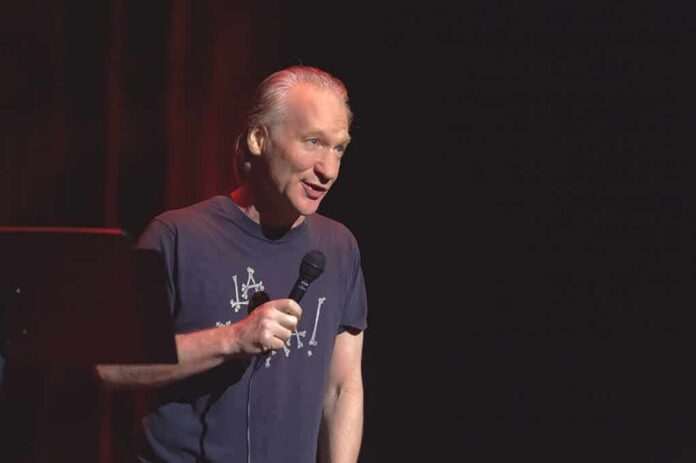
Bill Maher said President Trump was “gracious,” “measured,” and a good listener during a private White House visit, a surprising description from one of Trump’s most persistent critics.
Story Highlights
- Bill Maher described Trump as attentive and calm during a recent White House meeting.
- Maher still criticized Trump’s policies on his show after the visit.
- Trump claimed Maher likes him “more than people understand,” after the dinner.
- Research shows media coverage of Trump often centers on personality, not policy.
Maher’s Firsthand Account From Inside the White House
On his HBO program, Bill Maher told viewers that, in private, President Trump listened, made eye contact, did not interrupt, and did not get angry. Maher used words like “gracious” and “measured” to describe Trump during their White House meeting and dinner. He said he would not lie about the experience, even if some fans disliked it. Maher has long criticized Trump in public, which made his description stand out to viewers and media watchers.
Maher did not present the dinner as a change in his politics. He said positive things about Trump’s manners while still taking issue with parts of Trump’s record. On the same show, Maher pressed a former White House press secretary about subjects like Ukraine and Trump’s treatment of other leaders. That back-and-forth showed Maher’s split view: respect for the private tone in the room, and sharp debate over policy in public settings.
Trump’s Response and the Public Cross-Talk
After the dinner, Trump told reporters that Maher likes him more than people think. That remark fed a round of headlines and clips. It matched Maher’s account of a cordial meeting but did not erase their public clashes. Maher later returned to hard criticism in a podcast, showing how quick the tone can flip from polite, off-camera talks to harsh, on-air takes that fit each person’s brand and audience.
Other guests and commentators also weighed in on the unusual dinner list, which included pop culture figures. The attention proved how one private night can steer the media cycle. The exchange became less about policy steps and more about a question many people care about today: who the president is when cameras are off, and whether that view should shape how we judge public actions and results.
Why This Moment Hit a Nerve Across the Aisle
Pew Research Center found that news about Trump often focuses on his personality and draws sharp lines by audience ideology. Right-leaning outlets tend to be more positive, while left-leaning ones are more negative. The coverage also skews more negative than it did for recent presidents, with less focus on policy details. Maher’s story fits that pattern, where personal access becomes a proxy for judging a leader’s character.
𝐁𝐈𝐋𝐋 𝐌𝐀𝐇𝐄𝐑 𝐒𝐀𝐘𝐒 𝐇𝐈𝐒 𝐎𝐖𝐍 𝐒𝐈𝐒𝐓𝐄𝐑 𝐖𝐄𝐍𝐓 𝐒𝐈𝐋𝐄𝐍𝐓 𝐀𝐅𝐓𝐄𝐑 𝐇𝐄 𝐇𝐀𝐃 𝐃𝐈𝐍𝐍𝐄𝐑 𝐖𝐈𝐓𝐇 𝐓𝐑𝐔𝐌𝐏
𝐁𝐢𝐥𝐥 𝐌𝐚𝐡𝐞𝐫 isn’t exactly a Trump ally—he’s spent years mocking the president on his own HBO show. But in a new interview, Maher admitted… pic.twitter.com/h9H3hmOrQ2
— M.A. Rothman (@MichaelARothman) October 19, 2026
Many Americans, on the right and left, feel the system serves insiders first. They see a government slow to fix high costs, border issues, and social divides. A celebrity dinner will not change that. But it can reveal how elites talk to each other behind closed doors. When critics concede a private grace while keeping public concerns, it reminds us to judge leaders by outcomes that touch daily life, not only by dinner-table charm or late-night barbs.
Sources:
mediaite.com, variety.com, tvinsider.com, foxnews.com, pewresearch.org