
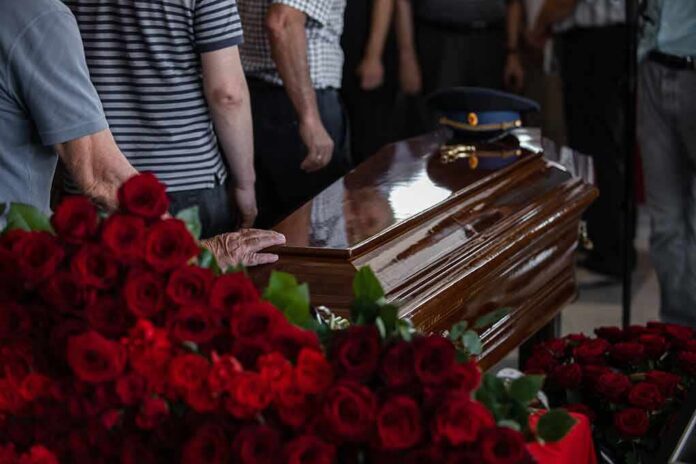
As the nation’s leaders gathered under the Capitol dome to honor Lindsey Graham, his sister Sen. Darline Graham quietly turned a state funeral into a deeply personal test of what political legacy—and family duty—really mean in today’s America.
Story Snapshot
- Sen. Darline Graham, newly appointed to her late brother Lindsey’s seat, is helping lead Capitol tributes as his casket lies in the Rotunda.
- Her role blends mourning with power: she is both grieving sister and sitting senator, asked to “finish his work” while deciding how much of his agenda she truly accepts.
- The Rotunda ceremony, authorized by Congress, showcases a rare bipartisan moment of unity that contrasts with deep public anger at Washington’s broader failures.
- Memorial clips of Darline’s emotional remarks risk blurring where personal grief ends and official narrative begins, in a time when many Americans distrust political theater.
A Family Loss That Instantly Became State Business
Senator Lindsey Graham’s sudden death at age 71 from an aortic dissection shook Washington and the world, triggering tributes from President Trump, foreign leaders, and lawmakers in both parties. South Carolina Governor Henry McMaster quickly used state law to appoint Graham’s younger sister, Darline Graham Nordone, to serve the remaining months of his term, turning private grief into public responsibility overnight. She was sworn in as a United States senator days later, stepping into her brother’s seat before funeral plans were even final.
Governor McMaster framed Darline’s appointment as both legal duty and emotional homage, saying it was his “honor to ask his little sister, Darlene Graham, to finish his work for him now.” That language matters. It tells voters this is not just a temporary caretaker but a symbolic continuation of Lindsey Graham’s legacy, even as she has little record of her own in national politics. For many Americans who feel elites protect their own, this fast handoff inside one family can look like the system serving insiders first.
The Rotunda Tribute: Bipartisan Respect Amid Deep Distrust
Congress passed a concurrent resolution authorizing the use of the Capitol Rotunda on July 28 for a tribute honoring the late Senator Lindsey O. Graham, one of the highest ceremonial honors the government can grant. His casket’s arrival at the Capitol and the Rotunda ceremony drew world leaders and top United States officials, including President Trump, who was scheduled to deliver a tribute before a National Cathedral service the same day. Lawmakers from both parties spoke about Graham’s decades in public life, his focus on the military, and his hard-line foreign policy.
Reporters described the floor tributes and Rotunda events as emotional and unusually bipartisan, with Democrats and Republicans joining to say, “We will not forget him” and to praise his impact on national security and international alliances. For viewers at home, this may look like the government pausing its constant fighting to show basic human respect. Yet many citizens on both the right and the left are likely to notice the contrast: Washington can move mountains for a powerful senator’s send-off, even while ordinary families struggle to get attention on issues like rising prices, broken health systems, and unsafe communities.
Darline Graham’s Dual Role: Mourner, Senator, and Heir—Or Not?
In this setting, Sen. Darline Graham’s presence is not just symbolic. Time and other outlets report that President Trump and key Republicans pushed her to take the seat, and she has now said she will seek a full six-year term, rather than simply finish out the months her brother left behind. That decision comes even as profiles note she has “little political history beyond praising her brother,” raising real questions about how much of Lindsey Graham’s hawkish, globalist-leaning record she will adopt or reject.
VP Vance delivers a tribute to Senator Lindsey Graham:
"I choose to remember Lindsey Graham as a man who could disagree with you, without being disagreeable…as a person who could fight with you on one issue but fight for you on another." pic.twitter.com/iSQlTiv2BD
— Vice President JD Vance (@VP) July 28, 2026
Recent coverage shows Darline already drawing a line between her brother’s priorities and her own, saying she will be “less focused on foreign affairs and national security” and more on domestic issues that hit home for South Carolina voters. For conservative readers tired of endless overseas spending, and for liberal readers worried about inequality at home, that shift may sound like overdue attention to Main Street. At the same time, many will worry this is just rebranding, not real change, especially with party leaders and President Trump openly backing her run.
Memorial Clips, Narrative Control, and the Deep State Fear
An Instagram reel and other short videos highlight “GRAHAM’S LEGACY” by showing newly sworn-in Sen. Darline Graham honoring her brother at a South Carolina-themed prayer breakfast in Washington, tying faith, family, and patriotism into one tight package. The same day’s official Rotunda tribute and Cathedral funeral, carried live by major networks and framed as a national moment, give the government strong control over how Lindsey Graham’s life and agenda are remembered.
Analysts warn that short memorial clips can blur where emotional truth ends and political storytelling begins, especially when we lack full transcripts or programs spelling out every speaker’s role. In an era when many Americans believe a “deep state” of elites uses ceremony and media to protect its own, the mix of heartfelt family grief, bipartisan praise, and carefully staged national honors may feed both respect and suspicion. People can honor a man’s service and still ask hard questions about the system that lifted him up—and that now seems eager to pass his torch to a sister learning politics on the fly.
Sources:
facebook.com, youtube.com, nytimes.com, cnn.com, abcnews.com, theguardian.com, foxnews.com, lgraham.senate.gov, govinfo.gov, economictimes.indiatimes.com