A private AI camera network helped send armed police after two innocent journalists, and now its errors are landing everyday Americans in the crosshairs too.
Story Snapshot
- Flock Safety’s license plate cameras wrongly flagged two journalists’ cars as “stolen,” triggering aggressive police stops.
- The company admits mistakes but insists its system is “highly accurate” and says officers, not cameras, should verify hits.
- Studies and lawsuits show repeated misreads and false alerts, raising serious Fourth Amendment and privacy concerns.
- Multi-million dollar contracts and growing misuse by some officers fuel fears of a profit-driven mass surveillance network.
AI Camera Error Turns Routine Drive Into Police Stop
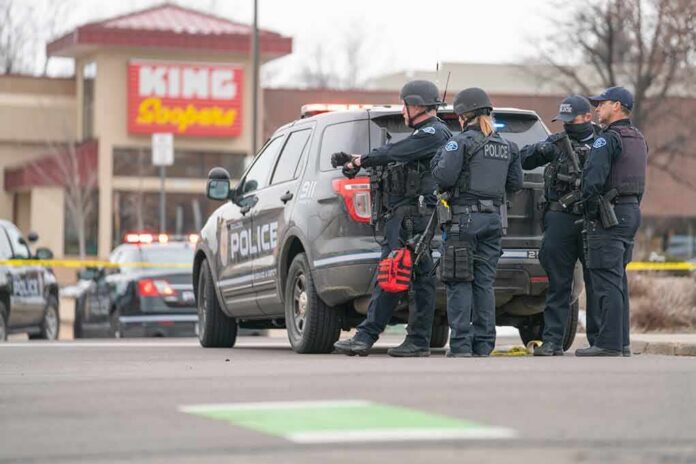
Automotive journalist Joel Feder and his wife were driving a Jaguar Land Rover press vehicle in Plymouth, Minnesota, when police suddenly surrounded them in a coordinated stop. The car was not stolen. It had been incorrectly flagged by Flock Safety’s automated license plate reader system after a flawed database entry treated media fleet plates as “hot.” A similar Flock-triggered error tracked another journalist for days, pinging police every time the press vehicle passed a camera, based on that same bad data entry made states away. What began as normal reporting work turned into armed traffic stops driven by code and distant clerks, not local evidence.
In both journalist cases, the underlying mistake came from human data entry in the National Crime Information Center and related hot lists, but Flock’s AI linked the partial plate information and broadcast alerts across the network without context. The cameras did exactly what they were built to do: match plate characters and push real-time alerts to officers. That “as designed” behavior might satisfy contracts, yet it turned a single typo into a rolling accusation, proving how fast a small error can threaten innocent people when plugged into a nationwide surveillance grid.
Flock Safety Defends Its System While Admitting Errors
After the Plymouth incident, Flock Safety acknowledged the error and stressed that its system is “highly accurate” and that alerts should be only one part of an investigation, not the sole basis for a police stop. Company statements say the cameras capture 93 out of every 100 plates correctly, which still means millions of wrong reads each month given the huge volume of scans. Flock executives also say they work with “democratically elected governing bodies” and have built audit logs that track who searched what plate and for which case, promising accountability when officers misuse the tools. They frame the technology as neutral and helpful, arguing that real problems occur when officers fail to follow policy and confirm alerts before acting.
Flock’s public line is that the system is an investigative lead tool, not a guilt machine. The company says officers are trained to treat hits as tips, then visually confirm the plate, car make, and situation before pulling someone over. They point to new audit tools that flag unusual search patterns and have already exposed Georgia officers who used cameras for personal reasons instead of real cases. From Flock’s view, the answer is more policy and oversight, not less technology. But for many drivers and civil rights groups, that reassurance rings hollow when people are still held at gunpoint over a single character read wrong by a machine.
False Alerts, Misreads, and a Growing Record of Harm
Independent reviews and lawsuits paint a harsher picture than Flock’s press releases. Business Insider found at least a dozen cases where Flock cameras misread plates or officers failed to verify alerts, leading to gunpoint stops, jail time, and even a police dog mauling an innocent man after a “7” was read as a “2.” A study by surveillance firm IPVM reported the Falcon cameras misidentified the plate’s issuing state about one in ten times and regularly got car type and make wrong. Civil liberties groups say those errors are not rare glitches but predictable results of a design that prizes scale and speed over human-level care.
Local audits echo that concern. In Oak Park, Illinois, roughly 40% of Flock-triggered stops were later judged mistakes tied to bad data or officer error. A WorldNetDaily report noted that, at Flock’s own 93% accuracy claim, scanning 20 billion plates a month still yields more than a billion bad reads. The American Civil Liberties Union estimates that less than 1% of cars scanned by license plate readers are linked to any wrongdoing at all, while one in ten Flock reads misidentify the state on the plate. For law-abiding families and gun owners simply driving to work, church, or the range, those odds mean a growing risk that software and distant databases can turn an ordinary commute into an armed confrontation.
Misuse, Mass Surveillance, and Constitutional Concerns
Beyond camera errors, misuse by some officers is making Americans question the whole system. Reports from Georgia describe multiple officers arrested or disciplined for using Flock cameras to stalk ex-partners or run personal searches, with company audits exposing searches that were not tied to any open case. Other investigations found Flock leaking search reasons and plate data into public web search results, showing just how fragile privacy can be once plate scans and search logs start moving across networks. These patterns suggest that “democratically elected governing bodies” are struggling to keep tight control over powerful tools that can quietly track a person’s movements across town.
Flock Safety Defends Cameras After AI System Triggers Wrongful Police Stops Of Two Journalists
www.zerohedge https://t.co/f39WT2XwDX— Inspector Clueso (@IClueso) July 19, 2026
Civil rights groups now argue that Flock’s automated license plate readers amount to mass surveillance that violates the Fourth Amendment by tracking innocent drivers without warrants or individualized suspicion. Some cities and agencies have ended or restricted Flock contracts after learning their data was being shared far more broadly than they realized, including with federal immigration authorities. For conservatives, the issue is larger than one company. It raises core questions about limited government, local control, and whether unelected tech firms should help build nationwide grids that can follow every car—journalist, pastor, gun owner, or parent—on every trip. When private AI platforms can misread a single digit and still send multiple armed officers after an innocent citizen, many see not “smart policing” but a warning sign that high-tech overreach is outpacing constitutional common sense.
Sources:
zerohedge.com, remio.ai, datafordefenders.org, malwarebytes.com, gadgetreview.com, wnd.com, businessinsider.com, eff.org, aclu.org, 404media.co, reddit.com, youtube.com, timesofindia.indiatimes.com, facebook.com, mrsc.org