
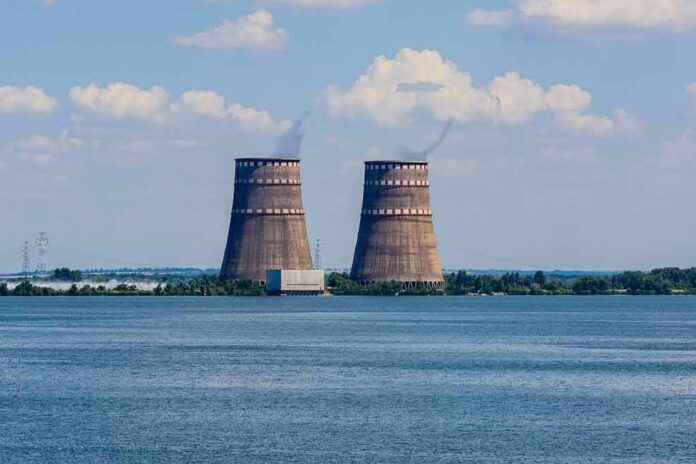
Europe’s latest heatwave has pushed the Danube River so low that nuclear reactors in Hungary and Romania are cutting power right when families and businesses need electricity the most.
Story Snapshot
- Record-low Danube levels have forced Hungary’s Paks and Romania’s Cernavoda nuclear plants to slash output and shut reactors.
- The Danube drought is hammering shipping, tourism, farming, and now energy security across central and eastern Europe.
- Hungary’s prime minister warns the country’s only nuclear plant may stay offline for weeks as water levels remain too low for safe cooling.
- Once-through river-cooled reactors face growing stress during heatwaves, exposing Europe’s fragile energy mix and heavy dependence on fickle natural conditions.
Danube Drought Pushes Nuclear Reactors Offline
Record-breaking drought and extreme heat have driven the Danube River to historic lows, forcing nuclear plants in Hungary and Romania to cut power when demand is soaring. Hungary’s Paks nuclear power plant, which normally provides nearly half of the country’s electricity, has reduced output on several reactors and carried out the first-ever full shutdown of a reactor block in its 44-year history. In Romania, operators at the Cernavoda nuclear power station have shut one reactor and signaled that a second would follow as river flow fell to nearly one third of normal July levels.
Hungarian and European media report that the Danube’s level in Budapest plunged well below previous records, dropping into the low tens of centimeters and exposing sandbanks, rocks, and even long-hidden shipwrecks. The plant’s operator, Magyar Villamos Muvek, says the river has reached a point where the cooling water intake structures are at risk, meaning pumps can no longer reliably draw enough water to safely cool the reactors. Romania’s nuclear company explains that its shutdowns were “controlled” and driven by “very low, unprecedented water level” conditions, underscoring the seriousness of the situation for both grid stability and plant safety.
How Low River Levels Threaten Nuclear Cooling
Most European river-cooled nuclear stations, including Paks in Hungary and Cernavoda in Romania, use a once-through system that pulls water from the river, passes it through heat exchangers, and returns it warmer. During normal years, that design works well and offers steady “baseload” power, but it depends on enough water depth and flow at the intake so the pumps can function and environmental limits on discharge temperatures are not breached. When water levels drop to all-time lows and heatwaves push river temperatures higher, operators face hard limits, and at Danube levels near or below the intake structures, reactors must be powered down to avoid damage to equipment and protect the river ecosystem.
Analysts point out that the physics of the reactors may remain stable, but the real constraint during drought is simple geometry and permit rules: if the river runs too shallow, the intake can suck in air instead of water, and discharge water can exceed legal temperature caps. That is why Hungarian officials tie shutdown decisions to precise river depth thresholds, describing “negative” water levels at the Paks intake that automatically trigger a full power-down. Technical studies on the Danube’s riverbed and heat load modeling around Paks show planners have long known about this vulnerability but have relied on historical river behavior that no longer holds in today’s more extreme climate.
Broader European Energy and Policy Fallout
The Danube crisis lands on a continent already under pressure from years of green mandates, coal closures, and a rushed turn away from reliable baseload sources without equal replacements. With heatwaves driving air conditioning use and drying up rivers, Europe is discovering that its energy system depends not only on complex policies but also on simple things like rain and snowpack, and when those fail, the whole mix wobbles. Shipping on the Danube has slowed or stopped in several stretches, fuel barges run at a fraction of normal loads, and tourism operators report stranded cruise boats and canceled trips, all adding economic pain on top of rising power worries.
Budapest switched off decorative lighting on public buildings and landmarks after the Paks Nuclear Power Plant shut down for the first time in 44 years due to record-low Danube water levels.
The shutdown, which threatens Hungary’s power supply during extreme heat, has sparked… pic.twitter.com/vU0WJvPEnh
— Global South World (@g_s_world) August 3, 2026
For American readers, especially conservatives who value strong, independent energy systems, this European episode is a sharp warning about letting ideology outrun engineering. When leaders chase climate targets without securing robust, all-weather power, ordinary people pay the price in blackouts, higher bills, and emergency cutbacks to industry and farming. Nuclear power can still be a powerful tool for energy security, but river-cooled plants like Paks and Cernavoda show that designs must match harsher real-world conditions, with more resilient cooling options and serious respect for nature’s limits, not wishful thinking.
Sources:
thegatewaypundit.com, dw.com, bbc.com, apnews.com, world-nuclear-news.org, euronews.com, reuters.com, serbia-energy.eu, youtube.com, facebook.com, latimes.com, euperspectives.eu, kth.diva-portal.org