As thick wildfire smoke pushed Toronto’s air to the worst in the world Wednesday morning, millions got a sudden, choking reminder of how distant fires and distant decisions can hit home fast.
Story Snapshot
- Toronto briefly ranked as the most polluted major city on Earth as wildfire smoke settled over the region.
- Environment Canada issued an orange air quality alert and warned of “very high levels of air pollution.”
- Health officials urged people, especially seniors and kids, to stay inside and cut outdoor activity.
- The event shows how rising wildfire seasons and policy choices far away can threaten everyday life in big cities.
Toronto’s Air Quality Drops to Worst in the World
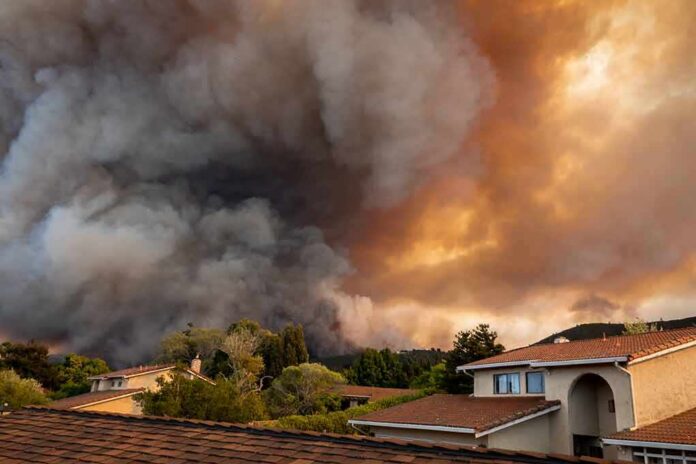
Wednesday morning, Toronto woke up under a thick, orange-grey haze as wildfire smoke drifted south from forests burning in northwestern Ontario. Around 8 a.m., global tracker IQAir listed Toronto as having the worst air quality of any major city in the world, putting it ahead of usual pollution hotspots overseas. Visibility dropped, the skyline looked blurred, and many people reported smelling smoke in stairwells, office lobbies, and subway stations as they began the workday.
Environment Canada responded by issuing an orange air quality warning for the city, a level used when the risk to health is considered very high. The agency’s special statement called out “very high levels of air pollution” and said poor air quality could last into Thursday for some areas as smoke continued to move through. This was not a local factory problem or a traffic jam issue. The main driver was fine-particle pollution carried hundreds of miles on changing winds from northern fires that most Torontonians will never see.
Health Risks and Official Advice for Residents
Public health officials stressed that this kind of smoke is more than a nuisance; it can seriously harm people’s lungs and hearts. The main danger comes from tiny particles, called fine particulate matter, that are small enough to pass deep into the lungs and even into the bloodstream. There is no clear “safe” level for these particles, and even short-term spikes can trigger breathing problems, chest pain, headaches, and eye and throat irritation, especially for people with asthma or other chronic illness.
Environment Canada and local health agencies urged residents to limit time outdoors, cancel or reschedule sports and events, and avoid hard exercise outside during the peak of the smoke. Seniors, pregnant women, infants, young children, and people with existing heart or lung disease were advised to be especially careful and to watch closely for symptoms. Officials recommended keeping windows and doors closed, using well-fitted masks such as N95s if outdoor trips were necessary, and improving indoor air with filters or purifiers when possible. Many people took to social media to share images of the eerie sky and to ask whether it was safe to commute, work outside, or send kids to camp.
Wildfire Seasons, Shifting Smoke, and Growing Public Frustration
The Toronto event fits a wider pattern that has become familiar across North America: wildfire seasons are longer, smoke plumes travel farther, and air quality rankings now swing wildly from day to day. In recent years, cities like Toronto, Montreal, Chicago, and New York have all briefly landed among the “worst in the world” lists when smoke drifted in from faraway fires. These rankings are based on real-time data and can change within hours, but the health impacts are very real, as seen in Ontario’s 2023 wildfire season, when asthma emergency visits rose sharply during smoke waves.
Wildfire smoke from Northern Ontario is affecting air quality across Toronto and parts of southern Ontario.#OntarioPost #OntarioToday #OntarioNews #Toronto #WildfireSmoke #AirQuality #Climate #PublicHealth #RealStoriesRealImpact pic.twitter.com/y6FpOiGTAF
— The Ontario Post (@TheOntarioPostM) July 15, 2026
For many people on both the left and the right, days like this deepen a broader sense that governments are reacting to crises instead of preventing them. Air warnings tell families to stay inside and wear masks, but do not answer harder questions about forest management, energy choices, or why critical infrastructure and emergency planning still seem behind the curve. The smoke that turned Toronto’s sky orange came from fires burning in remote northern areas, yet it quickly disrupted daily life, business, and public transit in one of North America’s largest economic hubs, underscoring how decisions far from city hall and Parliament can affect millions downwind.
Policy Challenges and the “Worst in the World” Era
Scientists and public health experts have warned that wildfire smoke is now a recurring cross-border threat, able to travel across provinces, states, and even oceans. That means local leaders must plan for days when air suddenly becomes dangerous, even if the city itself has few smokestacks or heavy industry. Recent experience shows how rankings like “worst in the world” are dramatic snapshots that grab attention, yet they also point to deeper structural issues, including aging infrastructure, slow forest and land management reforms, and disputes over energy and climate policy that leave ordinary people feeling exposed.
On Wednesday, Toronto’s alert was later lifted as conditions improved and the smoke plume shifted, dropping the city back to safer levels on Environment Canada’s index. But this was already the second time this month that Toronto’s air had been listed among the world’s worst because of wildfire smoke, with similar alerts affecting Montreal and other Canadian cities. For many residents, that repetition feels less like a rare emergency and more like another sign that big systems are failing to protect basic needs—like clean air—while everyday people bear the health risks, missed work, and added costs of trying to stay safe indoors.
Sources:
insiderpaper.com, cbc.ca, ctvnews.ca, chch.com, ospo.noaa.gov, nature.com, iqair.com, toronto.ca, ncar.ucar.edu