
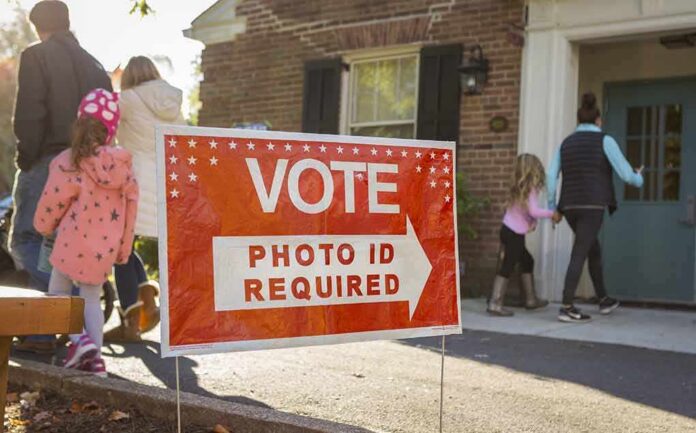
A top Democrat strategist just told his party to stop fighting voter ID because Americans overwhelmingly support it.
Story Highlights
- James Carville urged Democrats to quit opposing basic voter ID and focus elsewhere.
- Carville said opposition is a political loser because voter ID is very popular.
- Research notes supporters see voter ID as boosting trust in elections.
- Democrats now claim they do not reject all ID, but call some bills too strict.
Carville’s Shift Signals Voter ID Is Now Mainstream
James Carville, a veteran Democrat strategist, told his party to “just quit fighting” voter ID and move on. He said the public backs basic identification at the polls, and Democrats pay a price for resisting a common-sense step. His argument is blunt: this fight is not winnable in the court of public opinion. That matters because Carville speaks to Democrats who want to win, not lose ground over an issue many voters see as fair and simple.
Carville also framed the issue as political reality, not theory. He warned that voters think Democrats are soft on fraud concerns, even if actual fraud is rare. He said the party should stop letting Republicans define them as against election security and refocus on other topics. He has a track record of telling Democrats to be pragmatic and do what it takes to win elections, even if it offends progressive activists.
Public Confidence And The Case For Basic ID Rules
Supporters of voter ID argue it deters cheating and strengthens trust in the results. The Massachusetts Institute of Technology Election Lab summarizes that case: identification can deter fraud and build confidence that every legal vote counts. That confidence matters in close races. When citizens believe the system is guarded by simple checks, they are more likely to accept the outcome. This is why many states have already adopted some form of ID requirement.
Polling summaries also show strong support for photo ID at the polls across party and demographic lines. While the underlying crosstabs are not in this packet, the public trend line has long favored ID checks for in-person voting, which helps explain Carville’s warning about politics, perception, and losses from resisting a popular idea. Even critics often concede that some form of ID is acceptable if implemented with reasonable safeguards and alternatives for those without a driver’s license.
Separating Basic ID From Broader Federal Packages
Democrats now say they do not oppose voter identification itself, but they argue certain federal bills are too strict. The Associated Press reported that Democratic leaders distinguish between basic ID rules and broader measures that include proof-of-citizenship or tighter mail voting provisions. Carville also suggested dealing with real documentation issues in a practical way, like helping elderly voters who lack a driver’s license, rather than rejecting ID altogether.
That split is the next flashpoint. Many Republicans champion bills that pair voter ID with citizenship proof and mail security. Many Democrats prefer limited ID with backstops, such as affidavits or provisional ballots verified after Election Day. Voters should watch how Congress and states define “reasonable” ID: what documents count, how to help lawful voters who lack them, and how to prevent loopholes that invite abuse.
What It Means Under President Trump’s Second Term
President Trump has made election security a core promise, and voter ID is a pillar of that push. Carville’s remarks show how far the debate has shifted since earlier fights over “voter suppression.” When a top Democrat strategist says the fight is a loser, it signals a clear victory for the view that American elections should use basic ID to protect the ballot and calm doubts about integrity. That aligns with the public’s common-sense instincts about fair rules.
SHOCKER: Top Democrat Strategist James Carville Admits Left Is Losing ‘War’ on Voter ID – Urges Party to Cave and Surrender https://t.co/wbBAU2zpc4 #gatewaypundit via @gatewaypundit
— TheTrumpet777 (@TheTrumpet777) July 24, 2026
Conservatives should press for reforms that protect rights and keep voting simple. Lawmakers can set clear ID lists, offer free state IDs, and allow secure backups for rare cases, all while enforcing proof that federal elections are for citizens only. Carville’s concession undercuts years of partisan spin. The path forward is straightforward: secure elections, easy voting for citizens, and rules that treat every legal voter with equal dignity and every illegal vote as unacceptable.
Sources:
facebook.com, foxnews.com, breitbart.com, zerohedge.com, youtube.com, electionlab.mit.edu