Air traffic control audio captured a Coast Guard pilot declaring an emergency after a right-engine failure before safely landing a jet carrying Homeland Security Secretary Markwayne Mullin in Washington, D.C.
Story Snapshot
- Pilot declared an emergency after losing the right engine and diverted to Reagan National.
- The crew reported 14 people on board with about 2.5 hours of fuel remaining.
- The aircraft landed safely with no injuries; fire and rescue checked the jet.
- Secretary Mullin praised the Coast Guard pilots’ calm, professional single‑engine landing.
Emergency Declared And Safe Landing At Reagan National
Air traffic control audio recorded the crew stating they “lost our right engine” and requesting an immediate landing at Ronald Reagan Washington National Airport. The pilot declared an emergency and diverted to the airport in Arlington, Virginia, around 1:35 p.m. Eastern time during a flight to the Washington area. The jet landed safely and taxied clear. Officials reported no injuries after the landing, underscoring the crew’s training and the aircraft’s design for single‑engine flight.
The Metropolitan Washington Airports Authority said fire and rescue teams checked the aircraft before it proceeded off the runway. The measured response kept the airport running and ensured passenger safety. The Department of Homeland Security secretary was traveling on a United States Coast Guard jet operated as a government flight. The event ended as it should in a well‑run system: pilots stayed in control, responders met the aircraft, and everyone walked away safely.
Who Was On Board And What We Know About The Flight
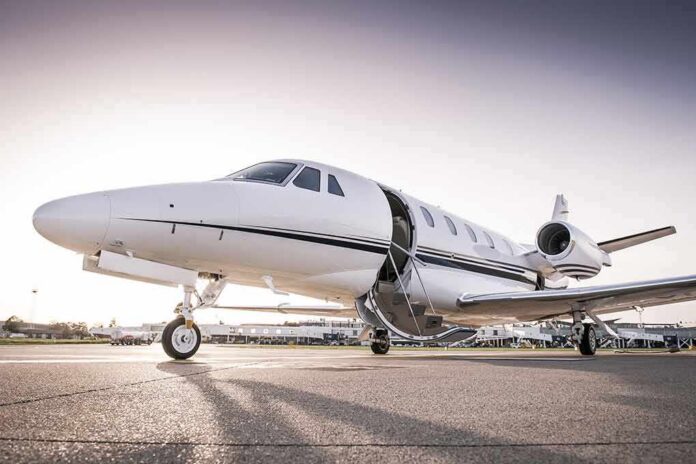
The flight crew told controllers there were 14 people on board and about two and a half hours of fuel remaining. That detail confirmed the jet had ample range and time to manage the emergency. Secretary Markwayne Mullin, who leads the Department of Homeland Security under President Trump, was among the passengers. News outlets identified the aircraft as a Coast Guard‑operated Gulfstream C‑37A type, a military variant used for senior travel and long‑range missions.
Coverage said the trip originated in the Georgia area and was inbound to Washington, D.C., when the right engine failed. Open‑source flight tracking and contemporaneous reporting aligned on the timeline and diversion to Reagan National. The safe landing outcome matches a known aviation pattern: crews train for engine failures, and twin‑engine aircraft are built to fly and land on one engine when procedures are followed with discipline and skill.
Mullin’s Statement And The Coast Guard Crew’s Performance
After landing, Secretary Mullin publicly praised the United States Coast Guard pilots. He said they made the single‑engine landing “feel routine” and showed “straight professionalism.” He added the pilots told him it was a first for them, a reminder that training prepares crews for rare but serious events. His account reinforces what the audio and the airport’s response already showed: cool heads, clear communication, and textbook airmanship brought everyone home safely.
Coast Guard plane carrying DHS Secretary Mullin makes emergency landing https://t.co/fihi41ZdOZ
— ABC11 EyewitnessNews (@ABC11_WTVD) September 4, 2026
Reporters noted that the exact cause of the engine failure was not yet established. Investigators could later point to something like a sensor fault, a bird strike, or a component issue, but no official technical finding has been released. For now, the facts are firm. A right engine failed. The pilot declared an emergency. The jet landed at Reagan National without injuries. Fire and rescue cleared the aircraft. The team did its job, and the system worked as intended.
Why The Outcome Matters For Safety And Accountability
This event highlights why strong standards, sharp training, and disciplined maintenance matter. Pilots must master checklists and aircraft control under stress. Controllers must clear airspace fast. Airport crews must meet the aircraft with the right gear. Conservative readers know this is what competence looks like. The United States invests in readiness so emergencies end in safe landings, not disasters. That is how government should operate every day, with calm skill and clear roles.
Aircraft Type And Fleet Considerations
Reports identified the aircraft as a United States Coast Guard‑operated Gulfstream V, designated C‑37A in military service. The Coast Guard maintains two C‑37 jets for senior travel and critical missions. These long‑range platforms balance speed and reach with proven safety records. The specific maintenance history and any related component issues for this airframe were not provided in initial reports. Officials can release more details after standard reviews, if needed for public accountability and lessons learned.
Bottom Line
A right‑engine failure forced a swift change of plans, and the Coast Guard team delivered a safe landing. The clear chain of action—declare, divert, land, and inspect—worked. Secretary Mullin’s praise matched what the facts show. The system protected lives without drama or delay. That is a win for competence, for disciplined public service, and for a security team that keeps calm when it counts.
Sources:
feedpress.me, kcra.com, unn.ua