
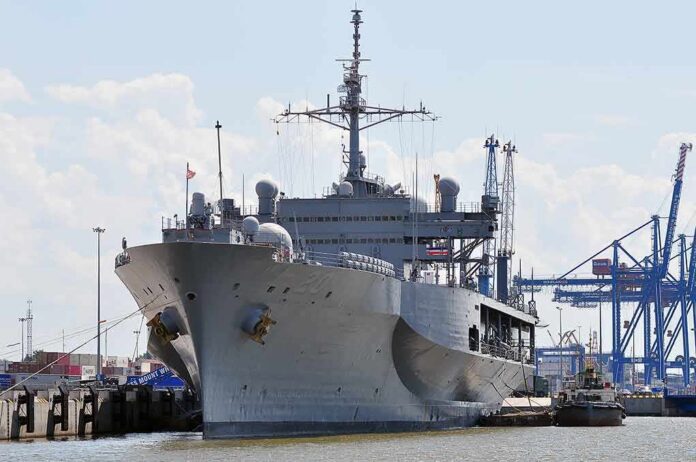
A February 28 strike that crippled the Navy’s Bahrain hub forced a long-haul resupply shift to Diego Garcia, reshaping how the fleet eats, fights, and gets fixed.
Story Highlights
- The Navy routed principal shipments to Diego Garcia after Bahrain was heavily damaged.
- Leaders said the Bahrain base will not be usable “anytime soon”.
- Crews saw priority-based rationing focused on food, hygiene, and mail.
- Longer routes strained resupply speed and maintenance rhythm.
What Changed After The Bahrain Strike
Reports say Iran’s February 28, 2026 strike heavily damaged Naval Support Activity Bahrain, the long-time logistics hub for the U.S. Fifth Fleet. A U.S. military official told The New York Times the Navy began using Diego Garcia as its principal shipment point soon after the attack. That shift moved core supplies about 2,000 miles farther from carrier groups operating near the Gulf, turning a fast, local pipeline into a longer, more complex chain.
Navy leadership later signaled the Bahrain base will remain off-limits for the near term. Chief of Naval Operations Admiral Daryl Caudle said, “We’re not getting back in there anytime soon,” confirming that planners must live with a new sustainment model for now. That means Diego Garcia, a remote British-administered atoll, has become the key node for food, fuel, parts, and mail that keep deployed crews ready to fight and ships able to sail.
How The Fleet Adapted At Sea
Navy statements quoted in reporting describe clear priorities aboard the carrier USS Abraham Lincoln. Leaders put mission first, then food, then hygiene items, then mail, while keeping water safe and meals healthy. That plan shows a wartime tradeoff: protect combat power and crew health, trim comforts until the pipeline recovers. It also tracks with a known logistics choice. Pulling back to a safer, distant hub reduces risk from enemy missiles but slows delivery and tightens inventory.
Longer routes also affect maintenance. Ships rely on frequent deliveries of spare parts, tools, and specialists. When the hub moves far away, schedules slip, and routine upkeep can stack up while carriers remain on station. Public reports tie these delays to the Diego Garcia shift after Bahrain was hit, though they do not publish detailed work orders or depot logs to quantify every impact. Even so, the pattern is familiar in war: distance and danger squeeze sustainment and wear on crews.
Why Bahrain Mattered So Much
Bahrain has hosted U.S. Naval Forces Central Command and the U.S. Fifth Fleet for decades and served as the main logistics center for operations in the region. Concentrating key functions at a single forward base made sense in peacetime and counterterror missions. But once that node took a major hit, the effect rippled through the fleet. A hub that once allowed quick turns for food, fuel, and parts became a bottleneck, and the Navy had to stretch its chain to the Indian Ocean.
3 Years of Middle East Combat Altering How Navy Supplies, Maintains Fleet, Leaders Say
conflict with Iran is morphing how the Navy fixes and supplies ships operating thousands of miles from logistics hubs as extended time at sea and the prospect of an extended naval commitment…
— Armed Forces Press (@AFP_press) September 24, 2026
This experience is shaping how the service thinks about risk, resilience, and range. Leaders and planners are learning that survivability and speed rarely live at the same address. Diego Garcia adds protection but costs time. The takeaway is simple and conservative: build redundancy, spread the load, and harden vital hubs. That approach respects taxpayer dollars, protects sailors, and keeps American power ready without betting the mission on one fragile point.
Sources:
realcleardefense.com, ms.now, ibtimes.co.uk, aljazeera.com, moneycontrol.com