As Ukraine’s drones choke off Russian fuel in Crimea and Moscow’s puppet leaders declare an “emergency,” the world is getting a stark look at how fragile Vladimir Putin’s war machine really is.
Story Snapshot
- Ukraine’s “Logistics Lockdown” has crippled Russian fuel and supply routes into occupied Crimea, forcing a halt to civilian gas sales.
- Russian-installed authorities have declared a state of emergency after major strikes on oil depots, ferries, and air defenses.
- The battle over Crimea’s supply lines shows how energy, not manpower, is now driving the war’s direction.
- Americans watching should note: this is what happens when a hostile power controls critical fuel and infrastructure.
Ukraine’s “Logistics Lockdown” Targets Putin’s Lifeline to Crimea
Ukrainian leaders have openly shifted strategy from grinding trench warfare to strangling Russian logistics, especially fuel, in and around Crimea. In late May, Kyiv rolled out a state program often described as a “Logistics Lockdown,” aimed at cutting the land corridor, ports, and bridge routes that keep Russian forces supplied on the peninsula.[5] The basic idea is simple and brutal: if you cannot move fuel, ammo, and troops, your occupation collapses no matter how many soldiers you have on a map.
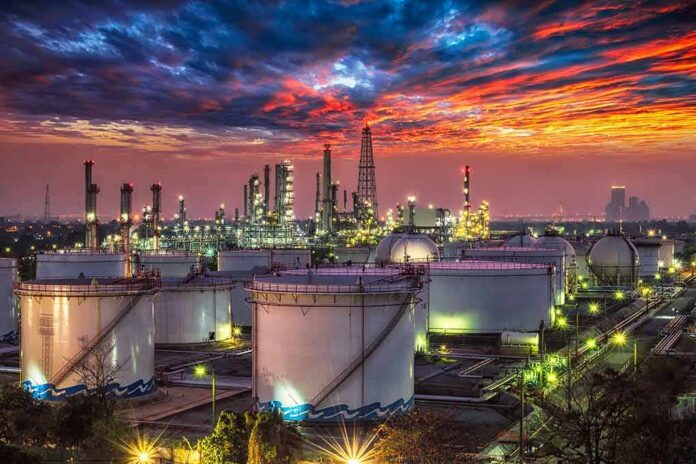
Recent Ukrainian strikes have zeroed in on oil depots, fuel terminals, and energy nodes at Kerch and nearby port facilities that Russia uses to feed its army in southern Ukraine.[25] After a major drone attack set an oil terminal ablaze in Kerch on June 21, smoke plumes were visible for miles, and satellite images showed large fires in the area.[25] These are not random hits; they are part of a deliberate effort to turn Crimea from a launchpad into a logistical dead end for the Kremlin’s war.
Crimea Plunged Into Fuel Crisis as Puppet Regime Declares Emergency
The strikes have had a fast and painful effect on daily life in Russian-occupied Crimea. The Moscow-installed head of the region, Sergey Aksyonov, announced a halt to civilian fuel sales after the Kerch oil terminal was hit, saying fuel would be reserved only for government and security services.[5] Reports from the ground describe stations closed to ordinary drivers, ration coupons, and small amounts of gas being moved over the Kerch Bridge under tight limits, all pointing to the worst fuel crunch since Russia seized Crimea in 2014.[22]
As the situation deteriorated, Russian-backed authorities escalated further by declaring a formal state of emergency for Crimea and the port city of Sevastopol after another wave of Ukrainian drone attacks.[18] Local officials have also warned of power outages and reduced street lighting, and they have canceled public events as they scramble to conserve scarce energy supplies.[6] A Russian war correspondent summed it up bluntly, saying there was “no gas at all” in parts of the peninsula, a stunning admission for what the Kremlin once sold as a safe tourist haven.[8]
Military Targets, Civilian Pain, and a War Over Narratives
Both sides now fight not only over fuel tanks and bridges but also over how the world sees these strikes. Ukraine says the oil depots, terminals, and ferries it targets are used to move Russian fuel, troops, and equipment, and outside military analysts agree Crimea is a key hub for Russian logistics into southern Ukraine.[3] Independent assessments note that rail lines and roads in Crimea carry military fuel and supplies, and that strikes on these routes disrupt Russian operations in Kherson and Zaporizhia regions.[3]
Russian-installed officials counter that these attacks are causing a civilian fuel crisis, pointing to at least four reported deaths and dozens of injuries from recent strikes on oil facilities in Crimea and nearby Krasnodar.[24] But those casualty figures come only from Russian-controlled authorities, and there is no neutral confirmation of how many victims were civilians versus military personnel.[16] At the same time, Moscow’s own actions—reserving fuel for state use, closing supermarkets early in Sevastopol to “save fuel,” and restricting bridge traffic—show that keeping its occupation forces running remains the top priority.[5]
Why This Matters for American Conservatives Watching From Afar
For American readers, Crimea’s crisis is a reminder that control of energy is control of power, both on the battlefield and at home. Ukraine is using cheap drones and smart targeting to do what a huge army could not—cut a hostile regime off from the fuel it needs to fight.[8] Russia, which has spent years using oil and gas as a weapon against the West, is now being forced to taste its own medicine as Ukrainian strikes hit refineries, depots, and ports tied to its war effort.[9]
The Security Service of Ukraine (SBU) has reportedly struck three Russian military vessels and air defence systems in occupied Kerch.
According to the SBU, drones from its Alpha Special Operations Center targeted the Project 15310 cable-laying ships Volga and Vyatka, along with… pic.twitter.com/C9d1DRaXBr
— Shaun Pinner (@ShaunPinnerUA) June 26, 2026
There is also a moral contrast that should not be ignored. Independent reporting has documented years of Russian missile and drone attacks against Ukrainian power plants and city grids far from any front line, leaving millions without heat or lights and destroying much of Ukraine’s power capacity.[27] By comparison, Ukraine’s current campaign in Crimea focuses on the fuel and transport networks that keep an invading army supplied. That difference in targets matters when we talk about proportionality, sovereignty, and the right of a nation to defend itself.
Sources:
[3] Web – Ukraine announced the launch of a “logistics lockdown” strategy …
[5] Web – Launching a “logistical lockdown” of the Russian army and scaling …
[6] Web – Ukraine to intensify middle strike drone campaign as Fedorov …
[8] X – Tightening the logistical lockdown of the Russian army and …
[9] Web – Ukraine has launched a programme called “Logistics Lockdown …
[16] YouTube – Can Ukraine isolate Crimea – or even retake the Russian-occupied …
[18] Web – Ukraine is slowly but steadily weakening Russia’s grip on Crimea
[22] Web – Crimea Without Fuel: The Logistics Lockdown Delivers Results After …
[24] Web – Russian strikes against Ukrainian infrastructure – Wikipedia
[25] Web – Chaos has erupted in occupied Crimea after Ukrainian strikes …
[27] Web – Russian-occupied Crimea is facing growing disruption after …