
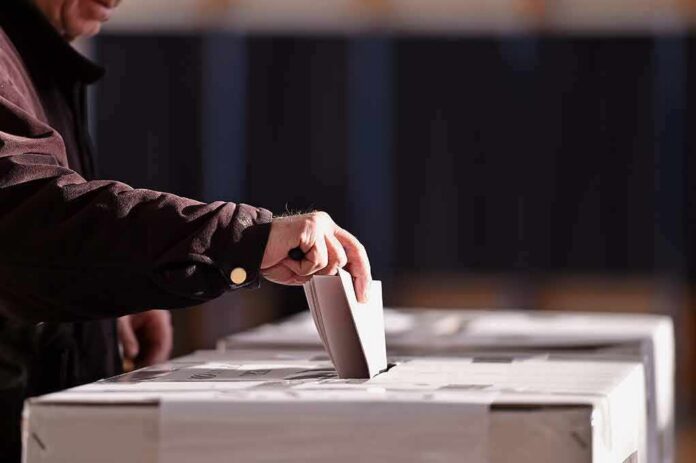
When voting technology fails in public, confidence fails with it; the difference between a bad night and a broken system is whether the paper, procedures, and transparency backstops work as designed.
The Short Version
- Westchester County’s Election Day disruption was traced to an administrative misconfiguration: a late programming change wasn’t propagated to all scanners, so some devices rejected otherwise valid ballots rather than miscounting them.
- Rejection is a safeguard, not a tabulation error; voters used paper ballots and emergency containers until updated media restored scanning, preserving a voter-verified record.
- Officials affirmed the standard canvass, recanvass, and post-election audit would reconcile every valid vote; this is precisely what paper-based systems are built to do.
- Public speculation about “stealing the election” arrived without evidence; the stronger critique is operational: pre-election testing and change control should have prevented a countywide outage.
What Actually Failed: Configuration, Not Counting
According to New York election officials, the root cause was mundane but consequential: a late programming change for a contest in one municipality was not reflected on other Election Day scanners across the county. Machines that kept the earlier configuration could not recognize that day’s ballot layout and therefore refused to accept it. Crucially, those scanners did not mis-tabulate— they rejected unrecognized ballots outright, forcing use of paper fallback until updated election media could be deployed. As a matter of election system design, that behavior is a protective failure mode: better to stop than to silently count incorrectly.
Once the problem was understood, the remedy aligned with a configuration miss. Westchester prioritized restoring at least one functioning scanner per site by distributing updated media, while directing all voters to complete paper ballots and deposit them into sealed emergency containers to be scanned later. State officials framed the rest in familiar terms: the canvass, recanvass, and post-election audit would account for every valid ballot.
How the Backup Works: Paper, Chain of Custody, and the Canvass
Optical-scan elections rely on a straightforward hierarchy of safeguards. Voters mark paper ballots—creating the primary record—then scanners interpret those marks. When scanners fail or are unavailable, jurisdictions shift to an “emergency” mode already codified in procedures: ballots go into sealed containers (in Westchester’s case, orange emergency bags) to be processed under bipartisan custody later in the day or at central count. That is what happened here. The distinction matters: a scanner outage is operationally disruptive, but with paper ballots and documented custody, it is not a vote-loss event by design.
Downstream, the canvass and recanvass reconcile the numbers. Poll books, voted ballot counts, scanner logs, and transport manifests are compared; any discrepancy triggers research and correction before certification. Post-election audits then sample paper ballots to verify the tabulation system’s reported outcomes. These layers exist for exactly the sort of failure Westchester experienced. The promise that “every valid vote will be counted” is not a platitude when paper exists and the reconciliation machinery is followed.
Why It Happened: Change Control and Testing Broke Down
The familiar operational sin here is not malevolence but governance. The county’s equipment was reportedly prepared and tested before a late change; machines elsewhere kept the obsolete definition and thus balked at the updated ballot. Two process failures follow. First, the change-control pipeline—authorizing, documenting, building, hashing, and deploying updated election definitions—did not ensure countywide propagation before polls opened. Second, logic and accuracy testing (the pre-election regimen of feeding test ballots through devices to confirm correct recognition and tabulation) did not catch the mismatch where it mattered: on the machines still running the older configuration. Even commentators sympathetic to the system’s overall security flagged that such a problem should surface in pre-election testing if the end-state configuration is actually the one tested.
Election administrators can close this gap with disciplined artifacts: change orders describing what shifted and why; build logs and cryptographic hashes for every removable media image; distribution manifests and bipartisan sign-offs at receiving sites; and targeted re-tests after any late modification. Jurisdictions that institutionalize those habits tend to have fewer surprises—and when they do, they can prove, not just assert, that every step was controlled.
What Did Not Happen: Evidence-Free Fraud Claims
The outage intersected a closely watched House race, and some voices immediately alleged “stealing the election.” That rhetoric arrived without accompanying documentation—no chain-of-custody breaks, no scanner logs showing manipulation, no precinct-level reconciliation contradictions. Meanwhile, the public facts pointed the other way: scanners rejecting unrecognized ballots, emergency procedures engaged, and updated programming restoring functionality. In an environment primed to conflate any equipment failure with tampering, the burden remains on claimants to provide specific, falsifiable evidence. None surfaced in this case.
The more serious critique is the boring one: a countywide configuration lapse is unacceptable because it was preventable. That is a management failure, not proof of fraud. Those two ideas can coexist: condemn the outage; follow the paper to count every vote.
🚨 Westchester New York Ballot Scanners Fail COUNTYWIDE After Late “Programming Change” Linked to Ardsley Race
“People are not happy.. and it’s not sitting well with a lot of people— it is not common.”
Letitia James says her office is monitoring the situation.. lol pic.twitter.com/39CJ0AQvoP
— DJ CandyMan (@DrCandymn) November 4, 2026
The Broader Pattern: Real Failures, Designed Safeguards
American elections have modernized substantially since 2016. The overwhelming majority of votes now produce a voter-verifiable paper trail, enabling recounts and audits even when devices stumble. Independent research catalogs that while systems do fail—sometimes dramatically—paper-centric processes, when executed, detect and correct those failures before certification. The trade is intentional: we accept the occasional messy day at the polls in exchange for evidence-based outcomes after canvass and audit.
Westchester fits that pattern. It demonstrates how a single administrative misstep can produce a countywide headache and erode public confidence in minutes; it also demonstrates why paper, custody controls, and a disciplined canvass are the non-negotiables. The lasting lesson is not that technology is flawless; it is that election administrators must treat software and configuration like any other critical infrastructure: no untracked changes, end-to-end deployment verification, and documented testing of the exact configuration voters will face.
What Voters and Officials Should Expect Next Time
For voters: insist on paper, use it confidently, and expect delays to mean process, not loss. For officials: publish the change logs, deployment manifests, and audit reports after an incident; sunlight beats speculation. And for both: judge the system not by whether something went wrong on Election Day—something always will somewhere—but by whether the jurisdiction can prove, with records and reconciliations, that every valid ballot was counted exactly once. That is the bar a constitutional democracy must clear, every time.
Sources:
pjmedia.com, lohud.com, abc7ny.com, thehill.com