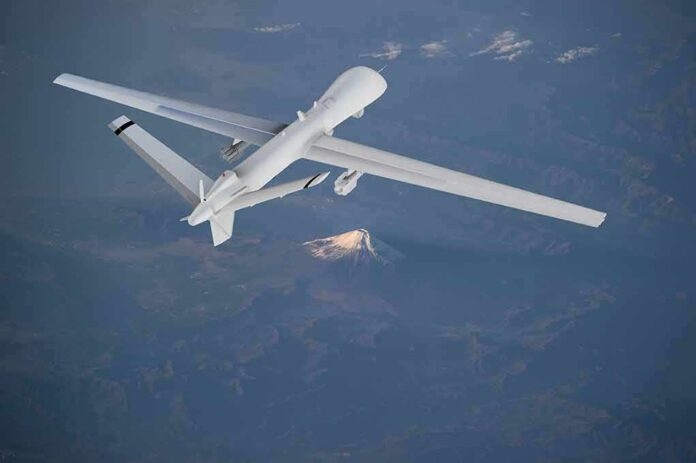
Mexico authorized a U.S. surveillance drone to fly over its territory, and that intelligence helped Mexican forces capture a top Sinaloa cartel boss.
Story Highlights
- Mexican officials said they approved a U.S. unmanned surveillance flight that aided the raid.
- Mexican troops captured Fausto Isidro Meza-Flores, an FBI Ten Most Wanted fugitive.
- The Justice Department confirmed the arrest followed a joint Homeland Security task force probe.
- The mission fits years of U.S.–Mexico intelligence sharing against cartels.
Authorization And Intelligence Sharing Led To A Targeted Raid
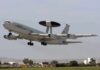
Mexican defense leaders said they authorized a U.S. unmanned surveillance aircraft to operate over Mexican territory in the days before the raid. Officials said they reviewed the flight route, reconnaissance area, target, and aircraft type before approval. They said analysts then used the intelligence to pinpoint Fausto Isidro Meza-Flores on November 20. Associated Press reporting said the U.S. flight supported tracking efforts, and Mexican forces then surrounded and seized the target in Sinaloa.
President Trump’s administration provided intelligence support that Mexico credited in the outcome. Mexico’s account described a formal process: analysts developed phone leads, requested U.S. surveillance help, and proceeded with approval through Mexican channels. Reporting said Mexico’s National Security Council had authorized intelligence sharing with the United States about three months earlier, laying groundwork for the operation. Officials did not name the U.S. agency that operated the drone or the specific platform used.
Who Was Captured And Why It Matters For U.S. Security
Fausto Isidro Meza-Flores, known as “Chapo Isidro,” is tied to major drug trafficking and violent crimes. The Federal Bureau of Investigation (FBI) placed him on its Ten Most Wanted list and described a State Department reward of up to $5 million. He was indicted in the United States District Court for the District of Columbia on May 2, 2012. The case linked him to the Sinaloa network and cross-border narcotics shipments that fuel addiction and crime inside American communities.
The United States Department of Justice said Mexican forces captured Meza-Flores on November 20 in Guasave, Sinaloa, after a Mexican military operation. The department said the arrest followed an investigation by a Homeland Security task force, underscoring U.S.–Mexico teamwork against cartel leadership. National Public Radio reporting also noted that Mexican officials credited intelligence from the Trump administration in the lead-up to the raid, aligning with Mexico’s public statements.
How This Fits Longstanding U.S.–Mexico Counterdrug Cooperation
For decades, the two countries have shared intelligence, coordinated arrests, and used approved flight support to hit cartel targets. Past reviews described procedures for U.S. aircraft aiding counterdrug missions to receive authorization for overflight or refueling in Mexico. The consistent theme is that information sharing, when requested and approved by Mexico, helps local forces act while keeping sovereignty intact. This operation followed that model: Mexico asked, reviewed, and approved; the United States supported.
Congressional and research records outline this pattern of cooperation across different administrations. The focus remains simple: identify traffickers, track movements, and enable arrests that disrupt drug pipelines. The Meza-Flores capture shows how targeted surveillance, fused with phone leads and on-the-ground forces, can produce results. It also signals that bilateral channels remain active and useful when the mission is clear, lawful, and aimed at stopping cartel violence that spills toward the U.S. border.
A Win Against Cartels, With Practical Limits On Public Detail
Mexican security officials provided the central facts on authorization and the effect of the surveillance. They did not release the exact drone type, flight logs, or the specific U.S. agency at the controls. That level of detail is common to hold back during active legal and security processes. The essential points are confirmed: Mexico asked for the flight, approved it, and then used the resulting intelligence to locate and capture an FBI-listed kingpin in Sinaloa.
A major security operation in Mexico has captured cartel leader Fausto Isidro Meza Flores, also known as “El Chapo Isidro.”
The operation triggered deadly violence in Sinaloa, leaving at least 11 people dead, including seven alleged cartel gunmen and four Mexican soldiers.
US…
— ColdFire (@Coldfire_001) November 22, 2026
This result matters for American families and border towns. Every high-level arrest can cut off supply routes, shrink cartel cash flow, and reduce violence tied to drug smuggling. It shows a policy approach that values strong borders, tough enforcement, and close coordination with partners when it serves U.S. safety. Under President Trump, agencies leaned in on intelligence support while respecting Mexico’s role on its soil. That balanced stance helped take a dangerous figure off the map.
Sources:
military.com, justice.gov, fbi.gov, newsday.com, congress.gov