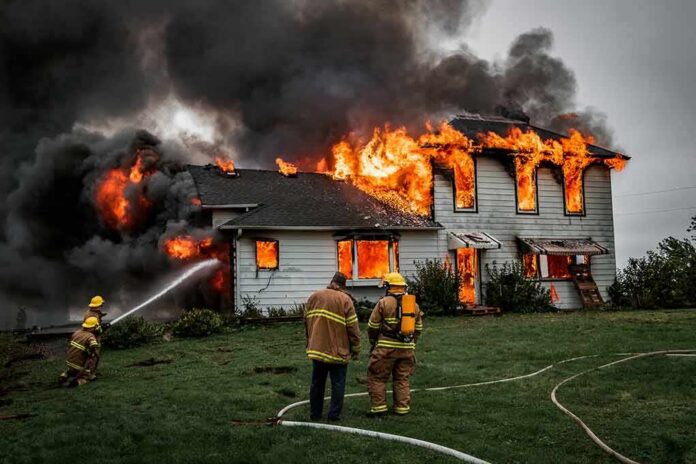
Wildfires pushed more than 20,000 people out of their homes in British Columbia, and the province declared a state of emergency as crews battled more than 100 fires.
Quick Take
- The province declared a province-wide state of emergency as wildfires spread fast across British Columbia.
- More than 20,000 people were forced to flee, with Summerland taking the hardest hit.
- Officials said the Bald Range fire grew with shocking speed and created dangerous conditions.
- The emergency gave the province extra powers, including travel limits and help securing housing for evacuees.
Provincewide Emergency Issued as Fires Spread
British Columbia declared a province-wide state of emergency on Saturday after fast-moving wildfires tore through communities along Okanagan Lake and forced mass evacuations. Premier David Eby said more than 100 wildfires were burning across the province, with nearly half of them out of control in hot, windy weather and prolonged drought. The move was not just symbolic. It gave the province extra powers to restrict travel and secure accommodations for evacuees.
Emergency officials said the declaration was meant to help responders move faster as conditions worsened. British Columbia Emergency Management Minister Kelly Greene said the emergency powers could protect residents and help find lodging that might otherwise be unavailable. The province’s EmergencyInfoBC system also posted active guidance for evacuees, including instructions tied to the District of Summerland and emergency support services. That shows the response was already active on the ground, not just on paper.
Summerland Hit by Rapid Fire Growth
The Bald Range wildfire drove the crisis. According to the Associated Press, the fire grew to more than 100 square kilometers and raced about 15 kilometers toward Okanagan Lake within hours. CBC reported that all 12,000 residents of Summerland were ordered to leave late Friday night as the blaze advanced quickly. Officials described the conditions as explosive, and that language matched the speed of the fire’s spread.
The evacuation totals shifted across reports, but the scale was unmistakably large. CBC said roughly 21,700 people were displaced across British Columbia, with another 9,700 on evacuation alert. The Associated Press said more than 20,000 people fled, while other reports rounded the total differently. That kind of variation is common during an active fire, when orders, alerts, and displacement numbers change by the hour.
What the Emergency Powers Mean
The state of emergency gave provincial leaders broader control at a tense moment. British Columbia Emergency Management Minister Kelly Greene said the declaration allowed the province to issue directions, including travel restrictions and housing support for evacuees. That matters because wildfire response often depends on speed, road access, and shelter space. When homes are threatened and highways are under pressure, officials need authority to act without waiting for slower routines.
Residents remain under evacuation orders in British Columbia, Canada, after wildfires forced more than 20,000 people to flee their homes across the province. pic.twitter.com/gefLoJF5vo
— CBS News (@CBSNews) August 10, 2026
There is still one limitation in the public record. The provided material does not include the full order text for the emergency declaration, so the exact legal trigger, scope, and duration are harder to verify from the record alone. Even so, the facts available are strong enough to show why the move happened. Hundreds of fires, a fast-moving blaze, and tens of thousands displaced made this a genuine provincial crisis, not a routine alert.
Sources:
youtube.com, abcnews.com, www2.gov.bc.ca