When federal officers pull nearly ninety crewmembers off cruise ships in a single U.S. port, the headline is not just a number; it is a window into how modern border enforcement intersects with digital crime, maritime labor, and the practical limits of cruise-line oversight in an era when contraband is a few taps away.
The Short Version
- CBP says 87 foreign crewmembers were removed from cruise ships in Boston under Operation Tidal Wave, targeting child sexual abuse/exploitation material among crew.
- The initiative is multi-agency and multi-phase; Boston follows earlier waves in San Diego and San Juan, with arrests and removals tallied across encounters.
- Enforcement blends criminal arrests in some cases with immigration removals in others, reflecting different legal thresholds and tools.
- The operation spotlights the compliance burden on cruise operators, the evidentiary bar for device searches, and the policy choice to use immigration law to move fast at the border.
What happened: a concentrated sweep in a single port
U.S. Customs and Border Protection (CBP) reports that officers at the Port of Boston have now removed 87 foreign crewmembers from cruise ships under Operation Tidal Wave, a targeted initiative against possession and distribution of child sexual abuse material (CSAM) and child sexual exploitation material (CSEM) among maritime crew. The Boston actions did not occur in one burst; they accumulated across boardings and inspections beginning mid-August, with specific sub-operations producing both arrests and additional removals as investigators progressed through ship calls and crew rotations. Mainstream coverage tracked the running count and identified ships implicated in discrete encounters, underscoring that the 87 figure is an aggregate across multiple, documented interdictions rather than a single case file.
CBP’s public record shows the strategy at work: between August 14 and 16, CBP and Homeland Security Investigations (HSI) arrested 11 foreign nationals after boarding two cruise ships, an early “wave” that established the pattern—intelligence-led device checks, targeted interviews, and immediate enforcement where agents said they found contraband or admissions. Subsequent actions added removals, including a ten-person pull from Norwegian Escape on August 31, as Boston-based teams continued to screen crew, examine quarters and electronics, and coordinate with HSI units tied to maritime and exploitation cases.
How Operation Tidal Wave works: legal tools and on-the-ground mechanics
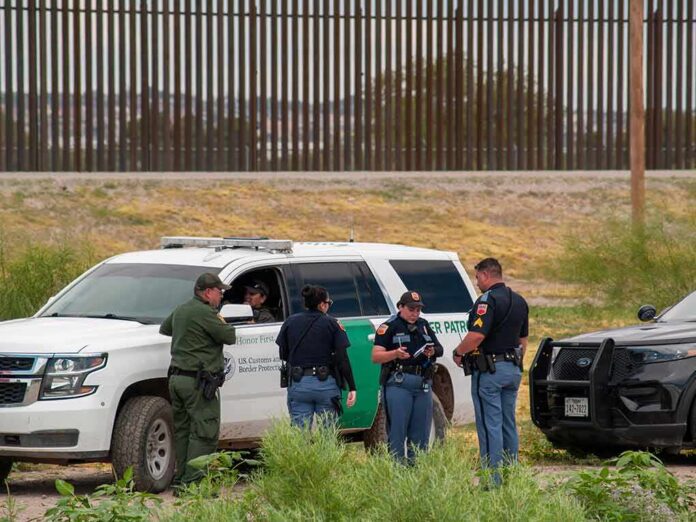
Operation Tidal Wave is explicitly multi-agency. CBP leads at the border and on the pier; HSI provides criminal investigative horsepower; local Internet Crimes Against Children Task Force partners and regional HSI offices plug into specific arrests and downstream charging decisions. The mechanics are straightforward but consequential: crews arrive on foreign-flag vessels to a U.S. port. Border authorities have broad search authority over persons and effects entering the United States. When officers develop reasonable suspicion or better—through tips, open-source leads, prior case intelligence, or anomalies flagged during inspection—they escalate to device searches, interviews, and, where probable cause forms, arrests or referrals to prosecutors.
Two distinct legal channels drive outcomes. First, criminal enforcement: HSI and prosecutors pursue charges where evidence supports possession, distribution, or production of CSAM/CSEM. Second, immigration enforcement: CBP can find a crewmember inadmissible and remove them administratively—often rapidly—under the Immigration and Nationality Act when evidence indicates involvement in crimes involving moral turpitude or other disqualifying conduct, even if no immediate criminal charge is filed in the United States. The Boston tally contains both components, which is why government communications reference “arrests” in some instances and “removals” in others; the policy design is to separate potential offenders from the stream of commerce quickly while allowing criminal cases to proceed where appropriate.
Why Boston, and why now: phased operations and maritime risk
CBP characterizes Tidal Wave as a phased national initiative, with earlier waves in San Diego and San Juan before Boston’s concentrated effort. That sequencing matters. It reflects an intelligence build: interdictions and interviews in one port lead to identifiers—names, devices, messaging handles—that can be acted upon when the same lines and vessels hit subsequent ports of call. It also reflects a risk calculus unique to cruise shipping. Crewmembers live in close quarters, rotate internationally, and carry multiple internet-connected devices. If a subset uses those devices to store or share illegal content, a port call is the only reliable moment for U.S. authorities to intervene.
The Boston wave amplified a message already circulating in cruise and regional press: enforcement is not episodic; it is methodical and cumulative. As coverage noted, the published figures are running totals across distinct boardings and dates, a common feature of federal operations because it communicates scale without waiting for the slow, case-by-case cadence of criminal adjudication.
What this means for cruise lines: compliance, culture, and consequence
For operators, the signal is unambiguous: crew screening, device-use policies, and shipboard reporting protocols are no longer back-office concerns; they are operational risks with regulatory and reputational exposure. While cruise lines do not control border enforcement, they do control hiring pipelines, digital access on board, and the culture that determines whether suspicious behavior gets reported before a vessel reaches U.S. waters. The Boston figures will push companies to revisit pre-employment vetting, onboard audits of crew internet access points, and training that distinguishes lawful personal use from red-flag conduct that should trigger intervention.
There is also a labor dimension that industry veterans should not ignore. A modern cruise ship employs a multinational workforce, often with hierarchical onboard living conditions and limited privacy. Aggressive enforcement intersects with those realities: a device check in a shared cabin, for example, has to be managed in a way that preserves chain of custody and fairness while still moving fast enough to prevent evidence destruction. The better prepared an operator is—clear policies, immediate access to HR and security officers during port calls—the smoother these interactions go for everyone involved.
Evidence thresholds, fairness, and the use of immigration law
The Boston operation shows, again, how border authorities leverage immigration powers alongside criminal law to move quickly. That dual track is by design. Criminal prosecution requires proof beyond a reasonable doubt and typically follows forensic analysis; immigration removal can rely on a lower evidentiary threshold, particularly at the border where admissibility is assessed in real time. CBP’s releases explicitly tie removals to statutory inadmissibility grounds that encompass crimes of moral turpitude in this context.
For readers trying to reconcile “arrest” versus “removal” in headlines, the distinction is not semantic. Arrests signal that HSI and prosecutors believe they have evidence to support charges; removals signal that CBP determined the individual could not remain in the United States, often pending or in lieu of criminal proceedings elsewhere. The aggregate “87” therefore mixes outcomes, but within an operation that is clear about its objective: identify crewmembers tied to CSAM/CSEM and separate them from U.S. jurisdiction swiftly, prosecuting where warranted.
JUST IN: Authorities have removed 87 foreign crew members from cruise ships for possessing child sexual abuse material.
The removals happened at the Port of Boston under Operation Tidal Wave, a CBP-led effort targeting that material among cruise crews. On one ship, officers…
— The Epoch Times (@EpochTimes) September 30, 2026
The path forward: durable changes in port security and industry practice
Operation Tidal Wave will not be the last national push of its kind. Digitally enabled exploitation crimes are portable; so are crews. Expect three practical consequences. First, recurring, intelligence-driven boardings when lines and specific vessels return to U.S. ports; prior hits create watchlists and patterns that justify repeat scrutiny. Second, tighter collaboration between port authorities, HSI, and cruise security teams so that evidence preservation and crew management improve with each iteration. Third, a recalibration inside cruise HR and compliance: fewer assumptions about off-duty device use and more structured monitoring of onboard networks, with clear consent frameworks aligned to flag-state law and contracts.
The moral stakes are not abstract. CSAM/CSEM is not victimless contraband; it is an artifact of real abuse. When enforcement finds it in the maritime workplace, the appropriate response is not only legal but institutional: make it harder to obtain and share on board, empower crew to report it, and treat device policies as part of safety, not bureaucracy. Boston’s 87 are a snapshot of that realignment in motion, and a reminder that border enforcement, when focused and well-coordinated, can reach into a complex commercial ecosystem and change behavior at scale.
Sources:
zerohedge.com, cbp.gov, usatoday.com, cruisehive.com, wmtw.com, thetravel.com, cbsnews.com